
You have done MBBS or are doing it abroad; now you have to give an exam to start your practical life in Pakistan. I did my exam in 2025 and also did a HOUSEJOB as well. At the start, I faced a lot of issues. I will try to give all the answers that once doubted me.
- NRE abbreviation is National Residency Examination
- NLE full form is National Licensing Examination
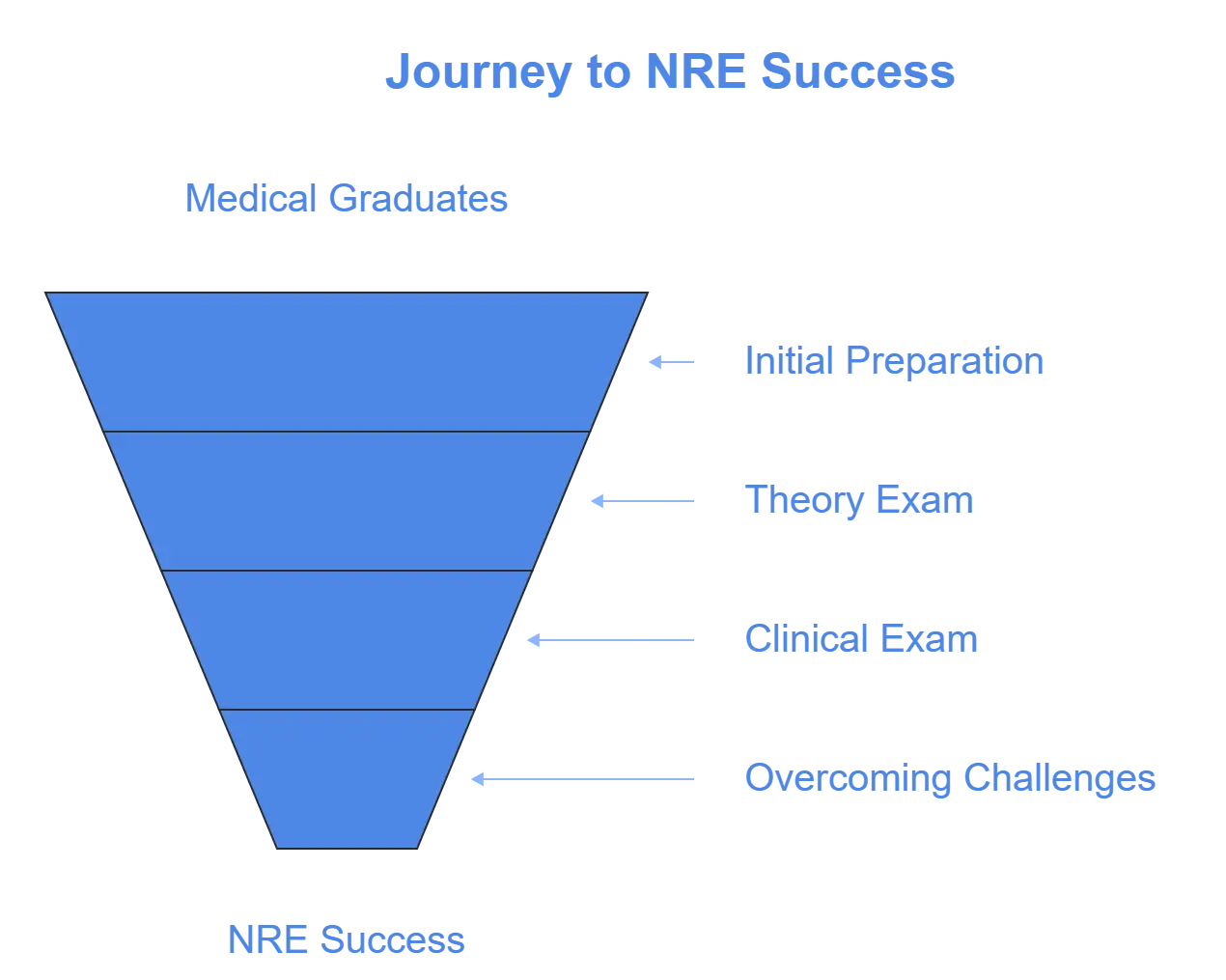
NRE is one of the toughest exams for medical graduates that takes time and energy. NRE or NLE is conducted twice a year, mostly in June or July and in November or December. You can give as many attempts as you can.
NRE is a 2-step examination as follows;
- Step 1: Theory (MCQ-based Theory Exam)
- Step 2: OSCP (Clinical-based Exam)
Step 1: Theory (MCQ-based Theory Exam)
There are 200 multiple-choice questions (MCQs) in the examination, and you have 3 hours and 30 minutes to finish it. Just 120 MCQs or 60% marks are needed to pass the exam. The exam is concept-based only; past papers cannot help you that much. Build and solidify your concept by reading the old papers, just understand the format of the exam.
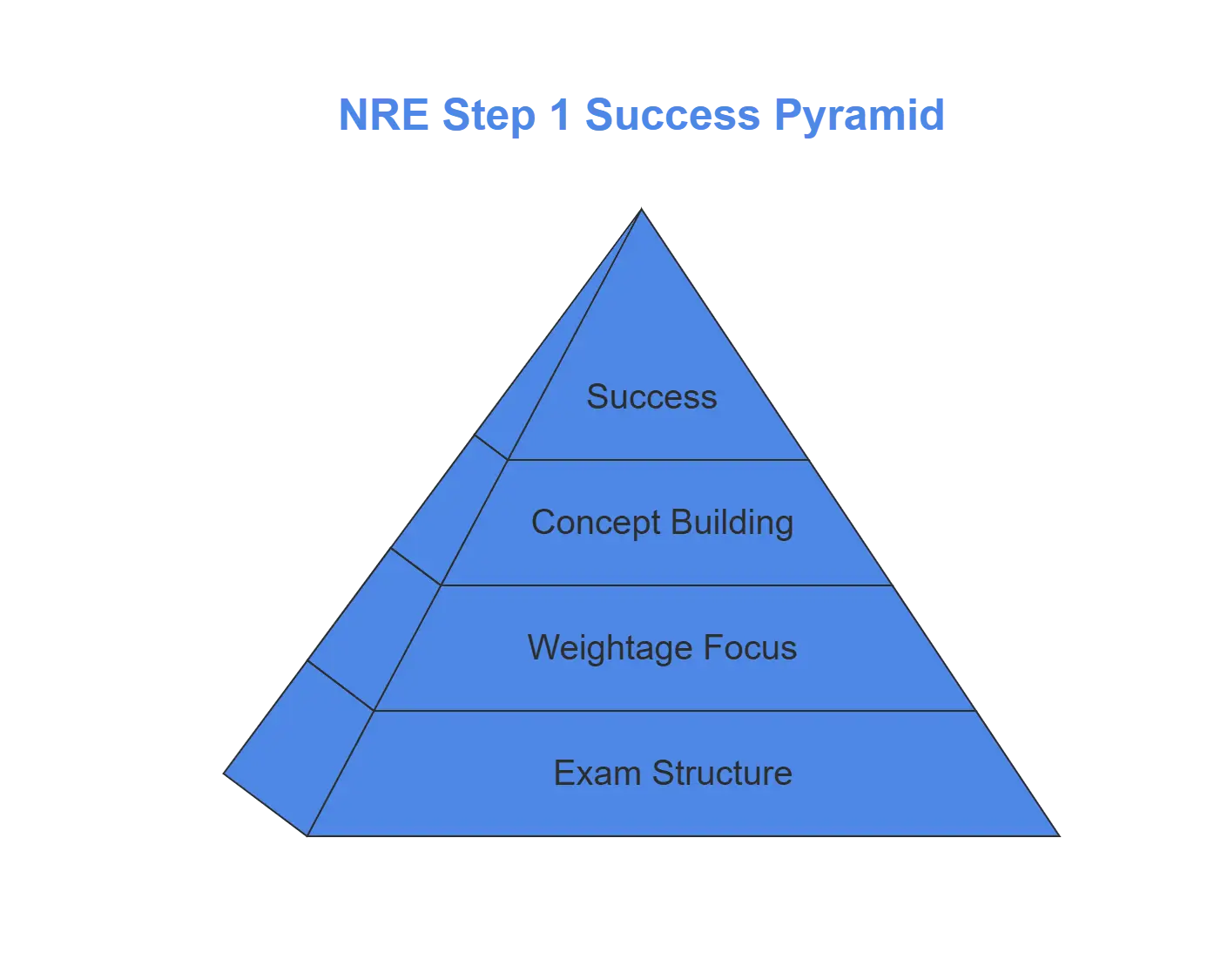
Focus on the exam weightage criteria and high-yield topics. There are many resources you can use, like
NRE made easy book, New Essence Book, also there is a subscription you can buy, like Dr. Sadiq by DML academy or Dr. Hafiz Atif by FAME academy. You can also contact me via WhatsApp.
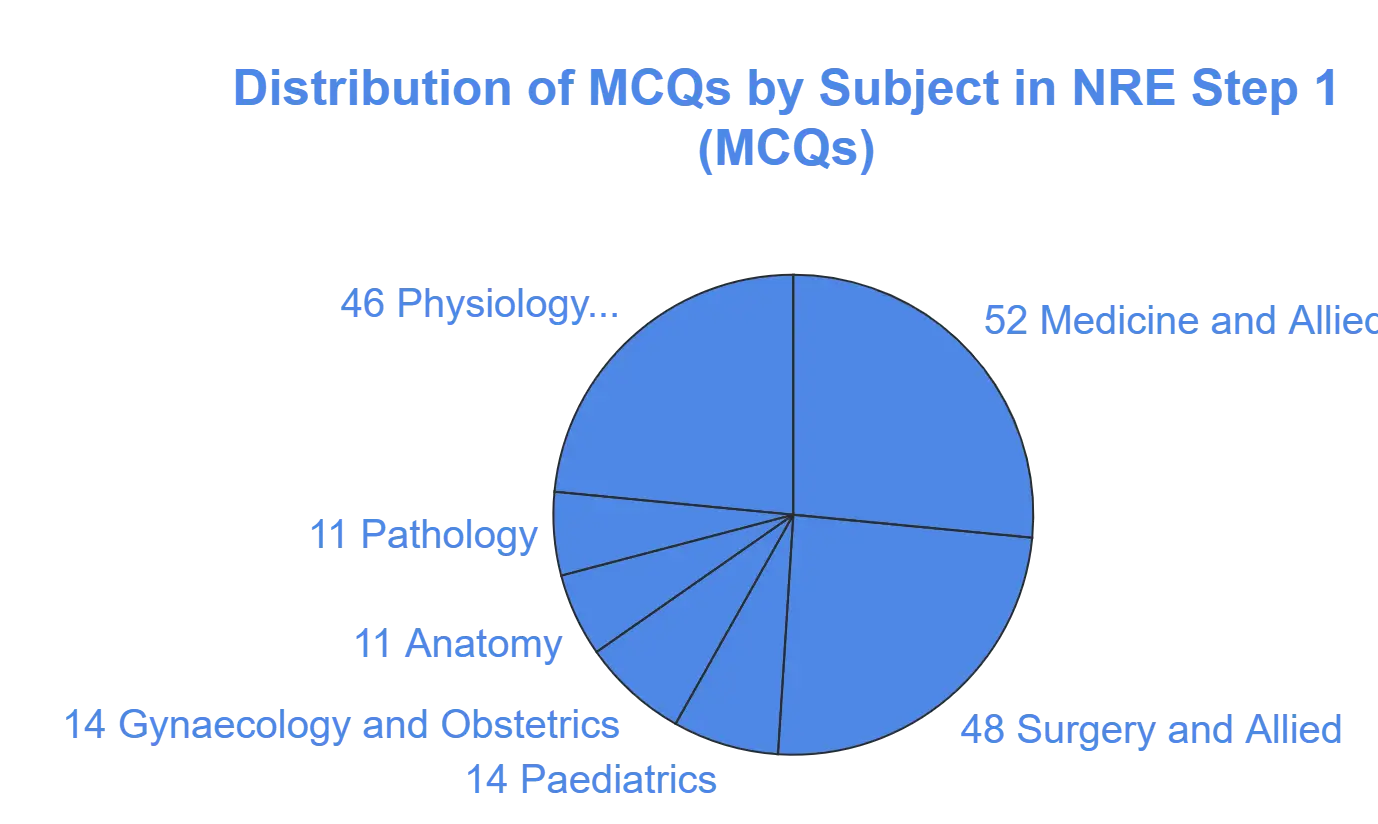
Here’s the typical breakdown of MCQs and weightage for PMDC NRE/NLE Step 1:
- Basic Sciences (30% or 60 MCQs)
- Clinical Sciences (70% or 140 MCQs)
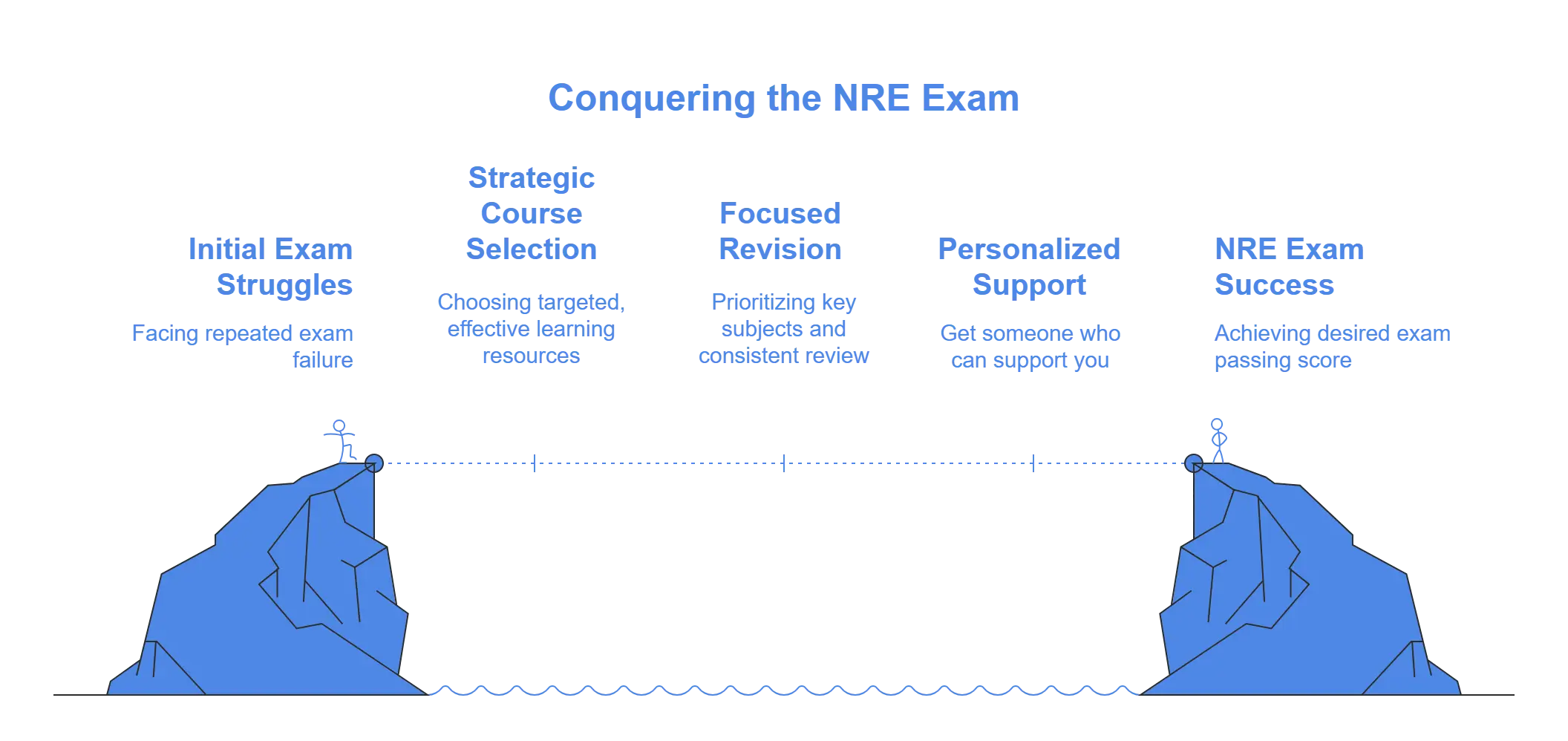
When I first gave the exam, I neglected the weightage criteria and scored 97 marks only. In the 2nd attempt, I scored 117 marks because I was overconfident and neglected revision, but in the 3rd i scored 129. I had been preparing since 2021. I learned the hard way Don’t make the same mistake!
Basic Sciences (30% or 60 MCQs)
| Subject | Number of MCQs | Weightage |
| Applied Pathology | 11 | |
| Applied Anatomy | 11 | |
| Applied Physiology | 10 | |
| Clinical Pharmacology | 8 | |
| Applied Biochemistry | 6 | |
| Community Medicine | 6 | |
| Forensic Medicine & Toxicology | 4 | |
| Total | 60 | 30% |
Clinical Sciences (70% or 140 MCQs)
| Subject | Number of MCQs | Weightage |
| Medicine and Allied | 52 | |
| Surgery and Allied | 48 | |
| Obstetrics & Gynaecology | 14 | |
| Paediatrics | 14 | |
| Ophthalmology (Eye) | 6 | |
| Otorhinolaryngology (ENT) | 6 | |
| Total | 140 | 70% |
Focus On Key Subjects
These subjects are particularly important for NRE Step 1. You should focus on the subjects from which most of the questions will come.
The following are the subjects I made a guide on for NRE aspirants to prepare exam more effectively.
- Neurology
- Biochemistry
- Endocrine
- Anatomy
- Pharmacology
- Ophthalmology
- Gyne Obs
- GIT
- GIT Surgery
- Respiratory
- Reproductive Cancer
- Immunology
- Musculoskeletal
- Surgery
- Microbiology
- Pediatrics
- Neonatology
- Hematology
- Renal
- CVS
Step 2: OSCP Clinical based
NRE step 2 is a clinically based exam. You will perform and give a viva according to the examination question. You have 3 hours and 30 minutes to pass the examination. A total of 20 stations are there, 3 stations are mandatory to pass, while in other if 1 fail, it does not matter that much.
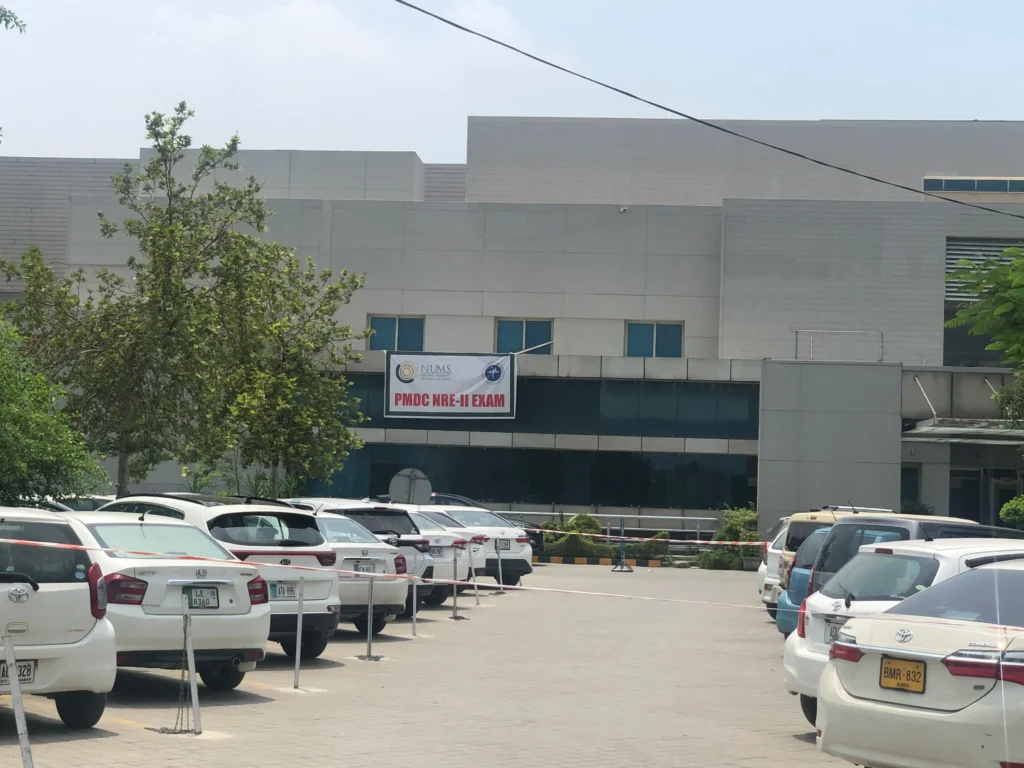
In each station, you will be given 6 minutes to convince the examiner to pass you. After 5 stations, you will get 5 minutes for a break, where you will sit quietly.
1. Compulsory Stations
The following are the 3 stations that are compulsory to pass, as follows.
- Physical Examination
- General Examination (e.g., fever, flu, cough, jaundice)
- Cardiovascular Examination (e.g., murmurs)
- Respiratory/Chest Examination
- Neurological Examination (cranial nerves, cerebellum)
- Abdominal Examination (spleen, liver, kidneys)
- Basic Life Support (BLS)
- Demonstration of proper BLS technique and response to emergency scenarios
- History taking in Pediatrics
2. Additional Stations ok if fail
- Examination of Cranial Nerves
- Examination of Upper Limb & Lower Limb
- Examination of Abdomen
- Thyroid & Cerebellum
- Basic Of ECG
- Breaking Bad News About Breast Cancer
- Derma
- ENT
- Gyne
- History Format & History of Cough (Dry Vs Productive Cough)
- History of Headache, Epigastric Pain & Imp List of Histories
- Consent Cases
- Important Counselling Cases (Counselling of patient, guardian to remove patient from ventilator)
- Important Instruments (Name, Parts, Indication & Contraindication
- Lab interpret
- Medical history
- Obstetric
- Ophthalmology
- Peads
- Radiology (Different Fracture X-Ray & CT)
Instructions For Aspirants
Go Prepared & be confident
- Well-dressed / groomed and with necessary medical equipment as per admit card.
- Do not loose your grip and remain calm especially in the mandatory stations
Listen to what the patient has to say
- Examiners are looking for real time interaction with the patients
- Do not use stock phrases, appear genuinely concerned
Check that you understand what you are being asked to do
- Make sure you understand the instructions, you may read them again if not understood
- If asked any question or if instructed to narrate task at hand you must be relevant and focused on the task and explain only the specific task at hand
Behave as you would in real life
- Do not do what you would not in real life
- Do not show mock sympathy or empathy
- Do not start narrating any step unless asked to do so by the examiner
Make sure you know why you are doing something
- Do not perform by rote, make sure to be clear regarding examination and why you are doing so.
- Approach each station logically and calmly. Remember to manage time within the station. Do only what is asked of you.
- lf time duration is over leave the station, as you will not get any extra marks.
- Where asked to take history etc do not ask irrelevant questions.