
A MAP Calculator is a simple tool that turns a blood pressure reading into one powerful number that reflects organ perfusion. In fast clinical settings, this number helps teams judge whether the brain, kidneys, and heart are getting enough blood flow. Because it summarizes pressure across the whole heartbeat, it often tells the story better than systolic or diastolic alone.
Mean Arterial Pressure MAP Calculator
Calculate MAP from standard blood pressure values using the classic bedside formula.
MAP Interpretation
- 65–100 mmHg: Adequate perfusion for most adults
- 60–64 mmHg: Borderline low
- <60 mmHg: Risk of poor organ perfusion
- >100 mmHg: Elevated; assess clinically
Disclaimer
This calculator is for educational purposes only and does not replace professional medical judgment.Explore more heart calculator:
What Is MAP (Mean Arterial Pressure)?
Mean Arterial Pressure is the average pressure in the arteries across one complete cardiac cycle. It is shaped by cardiac output and vascular resistance and is a direct marker of perfusion pressure to the organs. In practice, clinicians estimate it from a standard blood pressure reading rather than measuring it invasively.
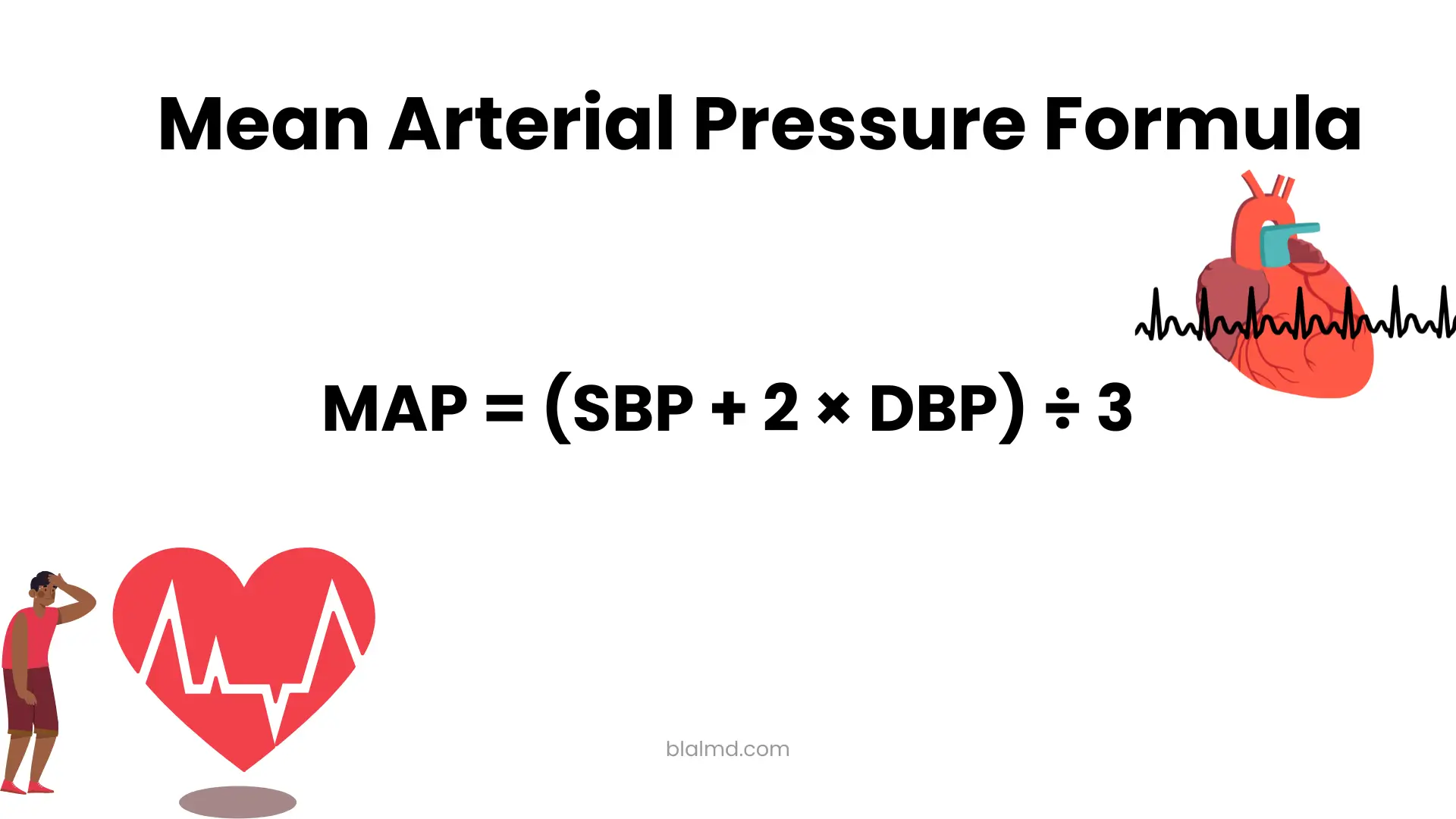
Formula for Mean Arterial Pressure (MAP)
The most used bedside formula is:
MAP = (Systolic BP + 2 × Diastolic BP) ÷ 3
This works because the heart spends more time in diastole than systole. Another way to write it is diastolic plus one-third of the pulse pressure. Both forms are equivalent and produce the same result.
How to Use the MAP Calculator
Using a MAP Calculator is straightforward. Enter systolic pressure, enter diastolic pressure, then calculate. The output is MAP in millimeters of mercury. This quick step is popular because it matches how clinicians already record blood pressure and can be done at the bedside or on a phone. If you prefer to do it manually, the same formula applies.
Tip for accuracy: Good technique matters. Use a proper cuff size, seat the patient with the arm at heart level, and avoid talking during measurement. Technique errors can shift readings and therefore shift MAP.
Normal MAP Range and Interpretation
For most adults, MAP between about 70 and 100 suggests adequate organ perfusion. A MAP persistently below the mid 60s can signal poor perfusion and calls for clinical attention. These ranges come from physiology texts and critical care practice patterns where low MAP is a risk for organ injury.
In sepsis and other shock states, guidelines recommend an initial target of 65 to secure basic perfusion, with later adjustment to the individual patient.
Why MAP Is Important in Medicine
MAP is a practical bridge between a blood pressure reading and the question that matters most: are the organs getting enough flow. It helps in several ways:
- Triage and monitoring: A single number makes trends easy to track across time and shifts.
- Therapy targets: In shock, teams adjust fluids and vasopressors to reach a safe MAP. Many start with a target near 65, then individualize up or down.
- Risk signals: Low MAP links to kidney injury, brain ischemia, and other complications in perioperative and ICU settings. Very low periods are harmful even when brief, which is why continuous monitoring is used for high-risk cases.
MAP Calculator Example (with Step-by-Step Calculation)
Let’s turn a routine reading into MAP in under a minute.
Blood pressure: 120 over 80 millimeters of mercury
Step 1: Multiply diastolic by two. 2 × 80 = 160
Step 2: Add systolic. 160 + 120 = 280
Step 3: Divide by three. 280 ÷ 3 ≈ 93.3
So the MAP is about 93, which sits comfortably in the usual range for healthy organ perfusion. The same approach works for any pair of systolic and diastolic values you enter in a MAP Calculator.
Clinical Applications of MAP
Critical care and shock
In sepsis and vasodilatory shock, MAP guides early resuscitation. International guidelines recommend starting with a target of 65 on vasopressors rather than higher routine targets. Some patients with chronic hypertension may benefit from a higher goal after initial stabilization, but this should be individualized.
Operating room and recovery
During anesthesia, drops in MAP can harm the brain, heart, and kidneys. Consensus statements link even short periods below about 60 to 70 with higher risk of injury, which is why anesthetists watch MAP continuously and act to prevent extended lows.
Emergency and transport
Paramedics and emergency teams use MAP to decide on fluids, pressors, and the urgency of transfer. A quick MAP check can unify communication among teams and reduce ambiguity when systolic and diastolic move in opposite directions.
Medical wards and clinics
For hypertension care, MAP complements systolic and diastolic by reflecting the integrated load on the vasculature. Long-term studies show associations between higher mean pressures and adverse events, which supports using MAP trends to refine risk conversations and therapy.
How to Use the MAP Calculator in daily practice
- Measure well. Follow best technique for blood pressure, then enter the values.
- Calculate and record. Add the MAP to the note or handover, especially when the plan depends on perfusion.
- Interpret with context. Compare with symptoms, urine output, mental status, and lactate when relevant. In a stable clinic visit, a MAP near 90 is common; in shock, safety often starts at 65 with later fine tuning.
- Monitor trends. Short dips below safe thresholds can matter. If the patient is high risk, continuous invasive monitoring may be safer than repeated cuffs.
Frequently Asked Questions (FAQs)
What does MAP mean in blood pressure?
It is the average arterial pressure across the full heartbeat. It reflects both systolic and diastolic time and is a stronger indicator of perfusion than either number alone.
How do you calculate MAP manually?
Use the simple rule. Add twice the diastolic to the systolic and divide by three. For example, 100 over 60 gives a MAP around 73.
What is a normal MAP value?
Many references cite about 70 to 100 as typical for adults at rest. Persistent values in the mid 60s or below can signal poor perfusion and need clinical attention.
Is MAP calculator accurate for all patients?
The formula is a reliable estimate for most adults. In unstable patients or during complex surgery, invasive arterial monitoring gives beat by beat data and may be preferred.
How is MAP used in ICU or shock management?
Teams target an initial MAP of about 65 with fluids and vasopressors, then adjust based on the person’s history and response. This target is supported by international sepsis guidelines and randomized evidence that higher routine targets do not improve survival.
Final thought
A MAP Calculator gives you a fast, dependable view of perfusion. Measure blood pressure well, run the calculation, and read the result in context. For routine care, it adds clarity. For shock and anesthesia, it guides life-saving decisions. When in doubt or when seconds matter, aim for a safe MAP, watch the trend, and tailor the target to the person in front of you.
References
- StatPearls. Physiology, Mean Arterial Pressure. Definition, determinants, and clinical context.
- NursingCenter. How to calculate mean arterial pressure with the bedside formula.
- MDCalc. Mean Arterial Pressure calculator overview and usage.
- Surviving Sepsis Campaign 2021. Adult guidelines recommending an initial target of 65 in septic shock.
- Surviving Sepsis Campaign 2021 full guideline on PMC. Rationale and subgroup details on MAP targets.
- StatPearls. Peripheral Vascular Resistance. Normal MAP context and organ perfusion needs.
- StatPearls. Arterial Pressure Monitoring. Why and when invasive measurement is used.
- Perioperative Quality Initiative consensus. Outcomes linked to low intraoperative MAP.
- StatPearls. Blood Pressure Measurement. Technique steps that affect accuracy.
- AHA Journal and related evidence on MAP and cardiovascular risk.