Pregnancy timing can feel confusing because “conception date” and “pregnancy weeks” are counted differently. Conception is the approximate day an egg is fertilized, while most medical timelines start from the first day of the last menstrual period (LMP). This guide explains both, shows the standard formulas, and helps you understand what a calculator is estimating.
What Is the Conception Date?
The conception date is the approximate day fertilization happens (sperm meets egg). It usually occurs around ovulation, not necessarily the day of intercourse, because sperm can survive for 5 days, and the egg is viable for 24 hours after ovulation.
When Does Conception Usually Happen?
In many cycles, ovulation occurs about 14 days before the next period, but that timing can shift with cycle length, stress, illness, and hormonal variation. That’s why conception is best understood as a likely window, not a guaranteed single day.
Conception Date vs Pregnancy Weeks
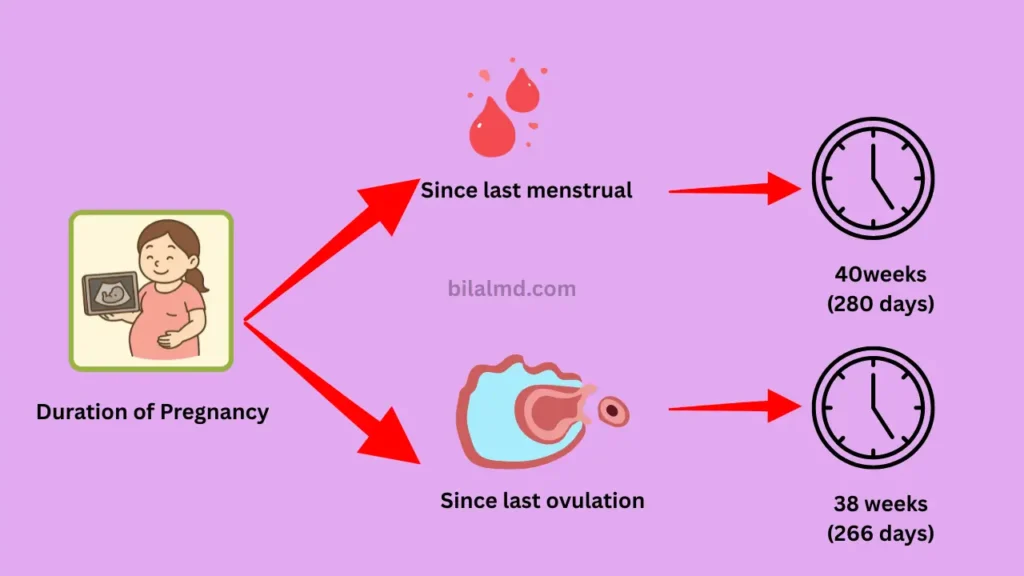
Most clinicians date pregnancy from LMP, not conception. That means at the time fertilization happens, you’re often counted as about 2 weeks pregnant on the medical timeline.
How to Estimate Your Conception Date
You can estimate conception using whichever input you trust most:
1) Using LMP and Cycle Length (simple estimate)
A common estimate is:
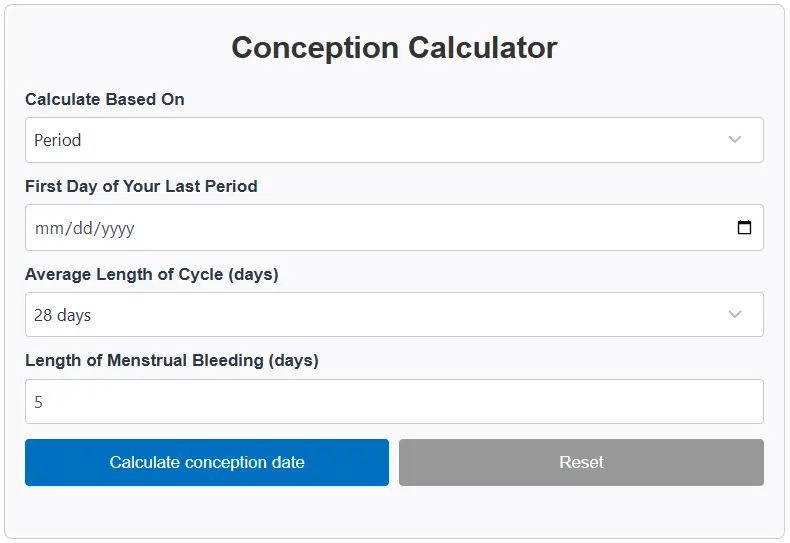
Conception ≈ LMP + (Cycle length − 14 days)
Example (simple):
- LMP = March 1
- Cycle length = 30 days
- 30 − 14 = 16
- March 1 + 16 days = March 17 (estimated conception date)
2) Using Ovulation Tracking
If you tracked ovulation (LH kits/BBT/cervical mucus), conception is most likely on ovulation day or within the fertile window because sperm can live 3–5 days and the egg about 24 hours.
3) Using Early Ultrasound Scan (best for confirming dating)
A first-trimester ultrasound is the most accurate way to establish gestational age and can refine the estimated timing especially when cycles are irregular or LMP is uncertain.
4) Using a Known Due Date (reverse estimate)
If you already have an EDD, a common reverse estimate is:
Conception ≈ Due date − 266 days (38 weeks)
| Method | Based On | Typical Use | Accuracy |
|---|---|---|---|
| LMP | First day of last period | Default if known | Good if cycles regular |
| Conception date | Known ovulation/fertilization | More precise when known | Better for irregular cycles |
| Ultrasound | Fetal size early pregnancy | Most accurate | Best for uncertain LMP |
| IVF Transfer | Embryo stage & transfer date | Very precise | Clinic-confirmed |
Pregnancy Dating Formulas
- Estimated Due Date (EDD) from Last Menstrual Period
- EDD = First day of last period + 280 days (40 weeks)
- Gestational Age from Last Menstrual Period
- Gestational age (weeks) = Weeks since first day of last period
- Gestational Age by Crown-Rump Length (CRL) – First Trimester
- Gestational age (weeks) = 5.2876 + (0.1584 × CRL)
− (0.0007 × CRL²)
- Gestational age (weeks) = 5.2876 + (0.1584 × CRL)
- Gestational Age by Biparietal Diameter (BPD) – Second Trimester
- Gestational age (days) = (2 × BPD) + 44.2
- Gestational Age by Head Circumference (HC) – Second Trimester
- Gestational age (weeks) = 1.854
+ (0.010451 × HC)
− (0.000029919 × HC²)
+ (0.000000043156 × HC³)
- Gestational age (weeks) = 1.854
| Method | When It’s Used | What It Measures |
|---|---|---|
| LMP | Everyone (best if regular cycle) | Weeks since last period |
| CRL | First trimester | Length of embryo |
| BPD | Second trimester | Width of baby’s head |
| HC | Second/third trimester | Head circumference |
What Is a Due Date (EDD)?
A due date (Estimated Date of Delivery, EDD) is the best estimate of when delivery might occur. It helps plan prenatal care and timing of milestones, but it is not a guaranteed deadline.
How Due Dates Are Calculated
Method A: From LMP (most common)
Standard clinical dating counts:
EDD ≈ LMP + 280 days (40 weeks)
A quick calendar method (Naegele’s rule) is:
- Add 7 days to LMP
- Subtract 3 months
- Adjust the year if needed
Method B: From Conception (if you know it)
If you figure out your conception/ovulation date:
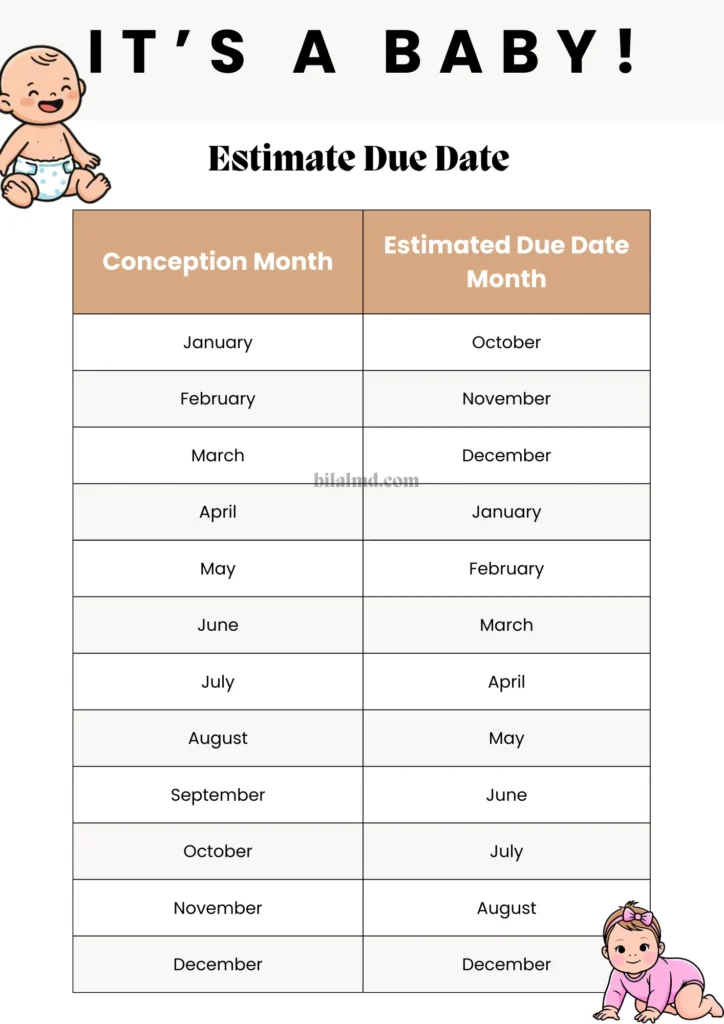
EDD ≈ Conception date + 266 days (38 weeks)
Method C: IVF Dating (most precise timing)
IVF dating is based on the transfer date and embryo age (your fertility clinic typically provides the official EDD).
Method D: Ultrasound Dating (confirming or adjusting)
If LMP dating and ultrasound differ by a meaningful amount early on, clinicians may “redate” based on the ultrasound because it’s most reliable in the first trimester.
Why Due Dates Aren’t Exact
Even strong calculators can’t guarantee an exact day because:
- Ovulation varies cycle-to-cycle
- Sperm and egg survival create a fertile window
- Implantation timing differs
- Ultrasound can refine early dating but still provides an estimate