Pulse pressure reflects how much the arteries stretch with each heartbeat. In physiological terms, the change in pressure for a given stroke volume is larger when artery walls are stiffer. As a result, the same heartbeat can create a wider pulse pressure in someone whose arteries have less compliance due to age or vascular disease. Clinical reviews summarize this with the idea that pulse pressure is roughly proportional to stroke volume divided by arterial compliance.
Artery stiffness tends to rise with age and is more common in people with diabetes or chronic kidney disease. That is why widened pulse pressure becomes more frequent in older adults.
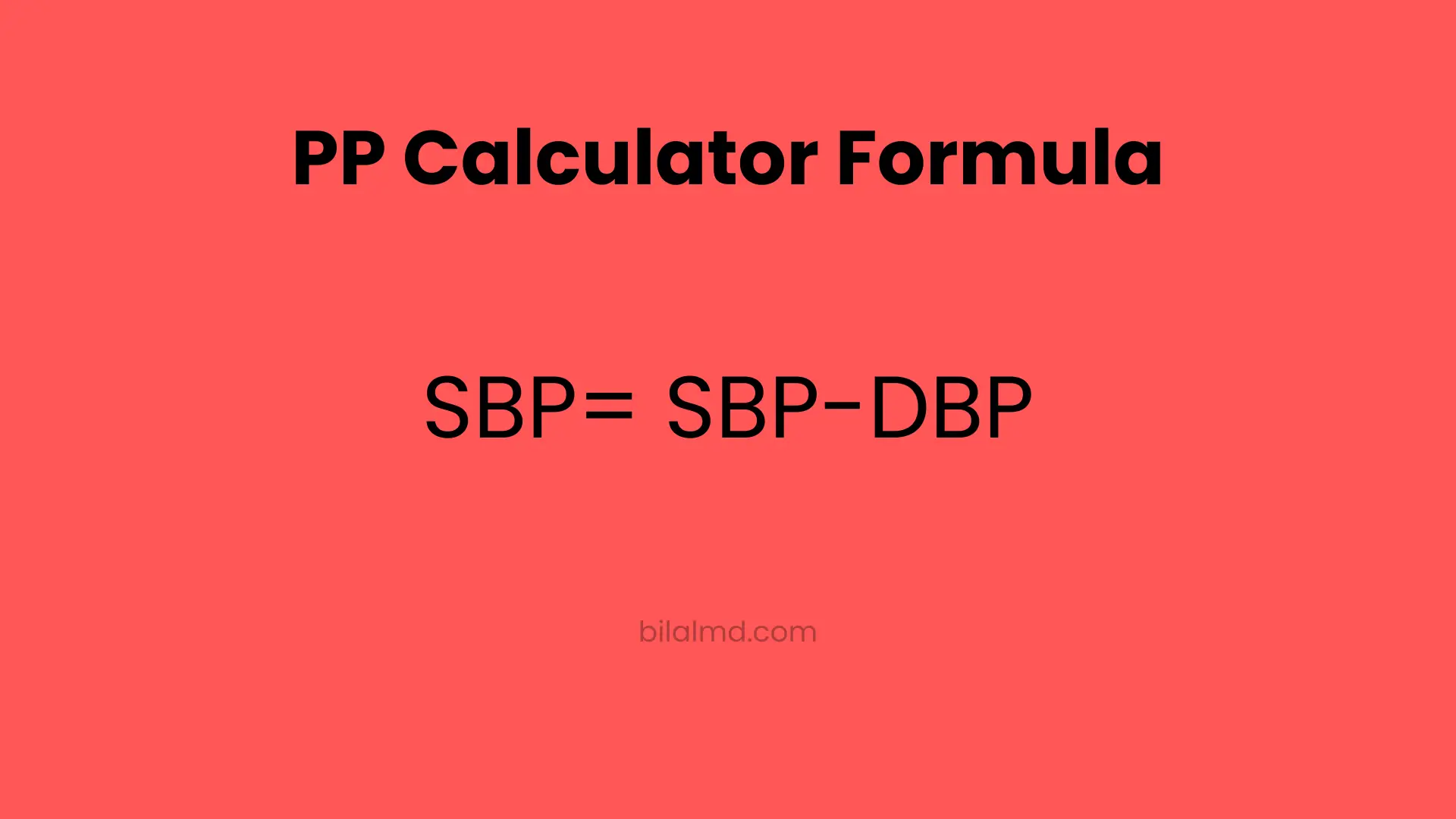
The simple formula in plain language
- Take a proper resting blood pressure
- Subtract the lower number from the upper number
- The difference is your pulse pressure
Clinicians often discuss the idea that as arteries stiffen, systolic pressure climbs more than diastolic pressure, so the gap grows. That wider gap is one reason pulse pressure can be a useful marker when thinking about long term risk.
What counts as normal, narrow, or wide
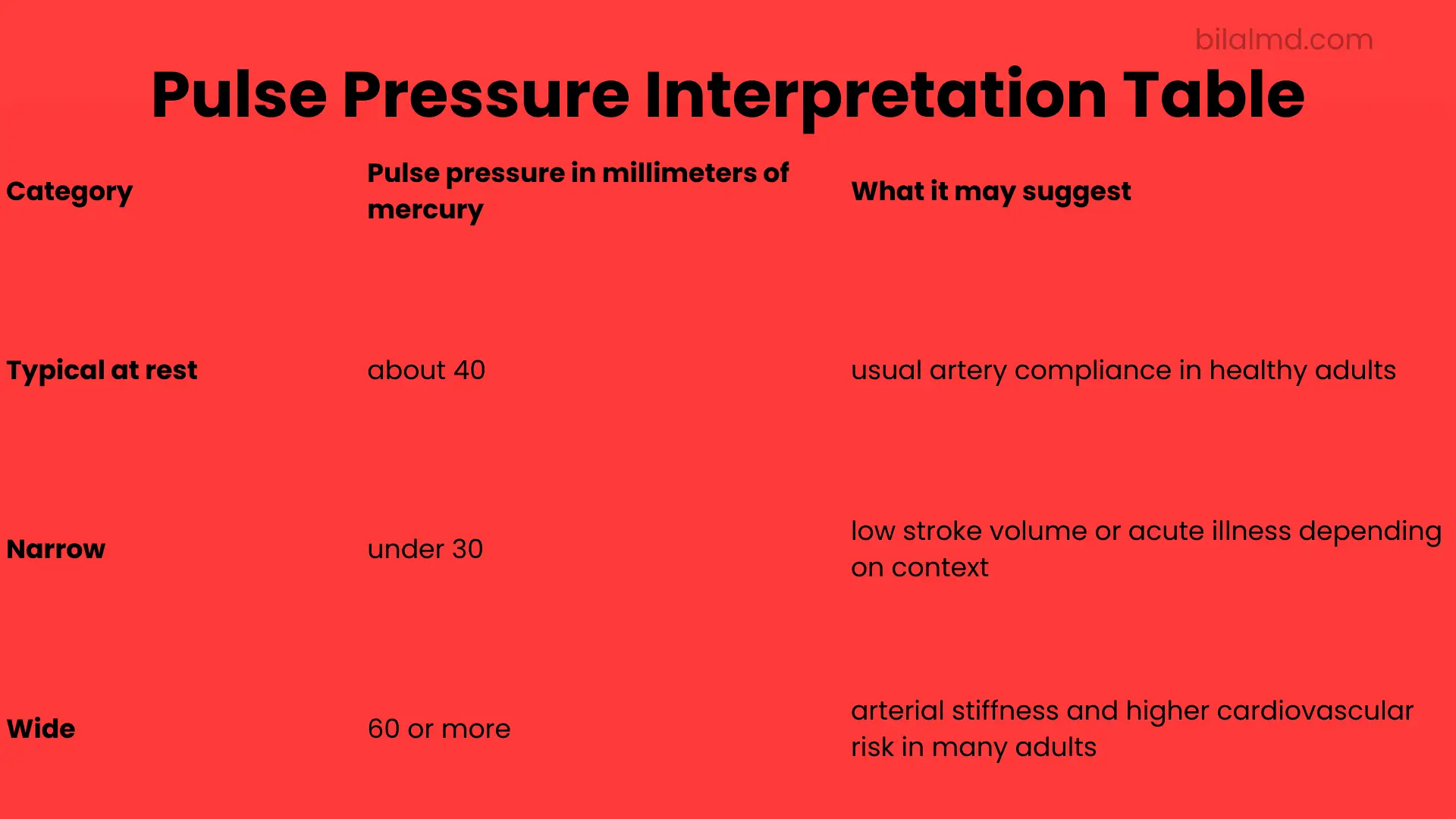
Medical organizations for patient education commonly state that a pulse pressure near forty at rest is typical. Many reviews and guides flag sustained values around sixty or more at rest as wide, especially in older adults. Narrow pulse pressure under thirty can occur in low stroke volume states and needs clinical context. Use these categories only for orientation. Decisions always depend on the person, the trend, and the full exam.
A concise orientation table
| Category | Pulse pressure in millimeters of mercury | What it may suggest |
|---|---|---|
| Typical at rest | about 40 | usual artery compliance in healthy adults |
| Narrow | under 30 | low stroke volume or acute illness depending on context |
| Wide | 60 or more | arterial stiffness and higher cardiovascular risk in many adults |
Large cohort and review papers show that wider pulse pressure tracks with greater risk of heart failure, stroke, and other events, independent of average blood pressure, though it is not a stand alone diagnostic.
How to measure and input numbers correctly
Accurate inputs make an accurate calculator. A trusted heart health organization explains the basics this way. The top number is systolic, the pressure during the beat. The bottom number is diastolic, the pressure when the heart relaxes between beats. Sit quietly, use a validated upper arm monitor, take two to three readings one minute apart, average them, then put the numbers into the calculator.
Blood pressure and heart rate are not the same thing
Many readers ask if a high heart rate means high blood pressure. The short answer is no. Blood pressure is the force of blood pushing on artery walls. Heart rate is beats per minute. They interact during exercise, stress, illness, and treatment, but they are different signals and one does not replace the other.
Can a pulse oximeter check blood pressure
No. A pulse oximeter checks oxygen saturation and pulse rate using light. It does not measure blood pressure. The United States Food and Drug Administration pages for patients and for industry both describe oximeters as oxygen saturation devices and give guidance about accuracy and labeling. They are not blood pressure monitors. For blood pressure use a validated cuff device.
Recent news coverage also highlights that regulators are tightening expectations for oximeter performance across different skin tones, which is important for oxygen readings but still unrelated to blood pressure measurement.
Why a wide pulse pressure can mean higher risk
As arteries stiffen with age, systolic pressure rises more than diastolic pressure. That produces a wider gap. Landmark cohort studies in older adults found that pulse pressure predicted heart failure events beyond other measures, and mechanistic reviews link wide pulse pressure with increased left ventricular workload and vascular injury. In short, it is a meaningful risk marker when interpreted in context with age, symptoms, lipid profile, diabetes status, kidney function, and smoking history.
A cardiology review also notes that while pulse pressure is informative, exactly how to place it inside future risk calculators is still being worked out. That is a good reminder not to over interpret a single number.
Practical steps that actually help
- Measure correctly
Sit five minutes, feet flat, back supported, arm at heart level, no caffeine or nicotine for at least thirty minutes, and use a validated upper arm device. Average two to three readings. - Track trends
One number is a snapshot. A month of properly recorded values tells a story your clinician can use. - Work on modifiable risks
Maintain a healthy weight, choose a lower-sodium pattern of eating, exercise most days with aerobic activities you enjoy, and avoid tobacco. These changes improve blood pressure control and artery health. - Use pulse pressure as a conversation starter
If your resting gap is persistently near sixty or higher, or under thirty with symptoms, bring a log to your visit. A classic study showed that wider gaps in older adults predicted more heart failure events, but action plans must always fit the person.
FAQs
How do I calculate pulse pressure
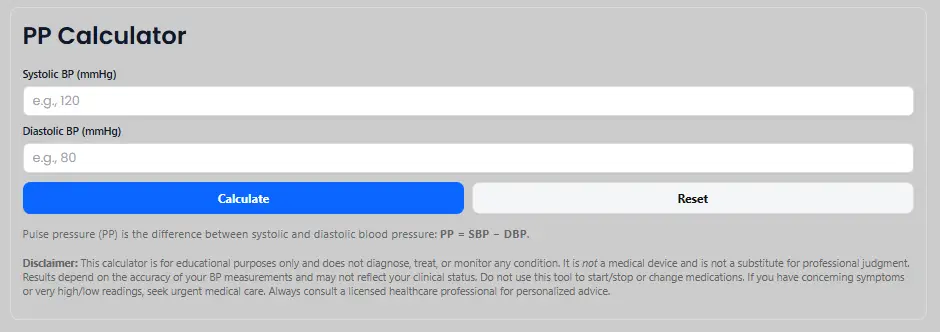
Subtract diastolic from systolic. The calculator above does this instantly and interprets the value for education.
What is a normal pulse pressure
Around forty millimeters of mercury at rest in healthy adults.
Does a pulse oximeter measure blood pressure
No. It measures oxygen level and pulse rate. Use a cuff for blood pressure.
Why can the gap be wide even when the average pressure looks fine
Because artery stiffness raises systolic more than diastolic as people age, which widens the gap.
My pulse pressure is always around thirty five. Is that okay
Many users share numbers in the mid thirties and ask if this is normal. Community replies often point out that patient education pages list forty as typical at rest. A single reading a little below that is not a diagnosis, but persistent narrow values should be discussed with a clinician, especially if there are symptoms like dizziness or fatigue.
Is a pulse pressure in the eighties dangerous
People sometimes post numbers like one hundred eighteen over thirty four which yields a very wide gap. Community clinicians usually encourage medical review because wide gaps at rest can reflect stiffness or other issues. The theme is to look at repeated measurements and at context, not to panic over one number.
Is narrow pulse pressure common in conditions that affect the autonomic nervous system
Members in communities that discuss dysautonomia and POTS frequently compare near standing values that show narrow gaps and then show that seated values return to a more typical range. The take away is that posture and fluid status can shift the gap, and trends are more informative than single checks.
What is the quick way to remember the difference between systolic and diastolic
Popular explain like I am five threads repeat the simple memory aid. Systolic is the squeeze and diastolic is the rest. That is a useful way to teach without losing accuracy.
Does the pulse pressure number change what I should do today
Long time clinicians on platform threads often advise focusing on fundamentals. Confirm accurate measurement, improve lifestyle, follow medication plans, and review numbers with your clinician. That advice aligns with major heart organizations that emphasize validated technique and long term risk management.
Is there a pulse pressure that is incompatible with life
Clinical communities stress that context matters. Very narrow gaps can occur in advanced pump failure and in patients supported by assist devices, and numbers alone never tell the whole story. This reinforces that calculators are educational and do not replace care.
Why does my oximeter show a pulse and my watch gives different numbers
General discussions note that pulse reading features on consumer wearables can vary and that oximeter pulse reading is not perfect either. People compare watch readings to finger clip devices and see drift. That is another reason to use a validated upper arm cuff for blood pressure and not to treat a pulse oximeter as a blood pressure tool.