Trying to conceive can be confusing with so much advice about timing. Ovulation usually happens mid-cycle, and your best chance of pregnancy is in the five days before it, since sperm can live up to five days while the egg survives for only about one day.
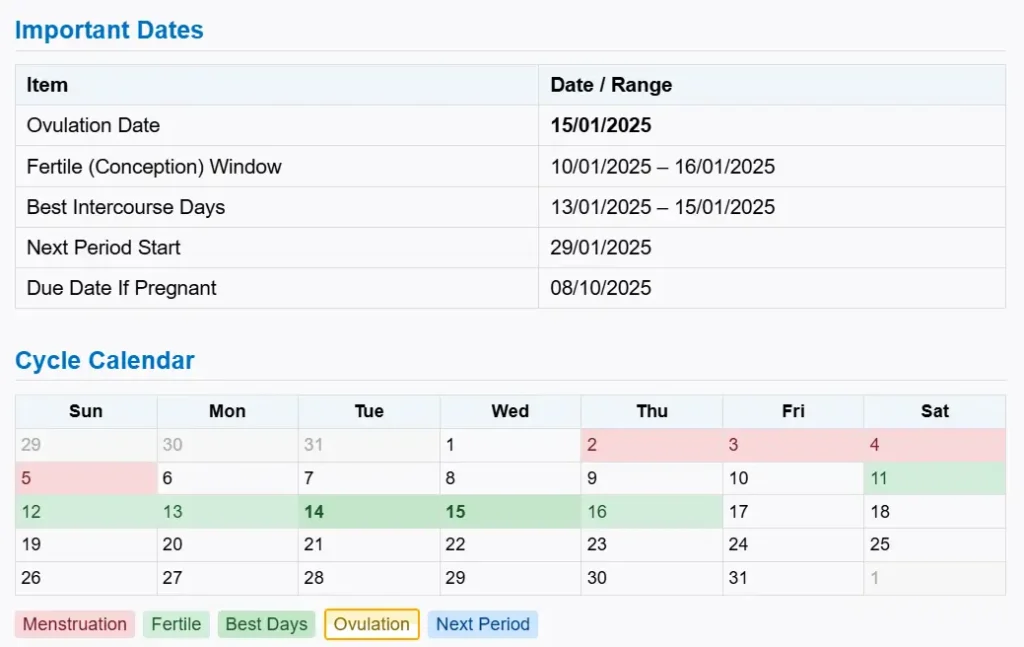
What is the Menstrual Cycle?
The menstrual cycle is a series of changes a woman goes through, from bleeding to ovulation to fertilization. As puberty starts from the age of 12 years or 15 years to the age of 52 years, after that periods stop and won’t come again. Pituitary glands in the head and ovaries in the abdomen both of them have great role in the menstrual cycle. They regulate sex hormones in female like estrogen and progesterone. After 52 years of life span, the periods stop and she hit menopause. The menstrual cycle starts from the day one of bleeding and ends the day before the next cycle, usually a regular cycle is of 28 days. If periods come late or early its normal by one week, don’t be worried.
If a female has sex in ovulation period (fertile window), the sperm can meet the ovary and both of them join and make a new type of cell called a zygote. That zygote moves from the fallopian tube and stays in the uterus for a week. In the meantime, the uterus thickens for the attachment of the egg(zygote).
The uterus will thicken when there is pregnancy or not, the lining of it will shed if she don’t get pregnant and she will have menstruation and the cycle repeats
In the menstrual cycle, there is blood and mucosal tissue in the vagina from day 2 to day 7. Periods stop in pregnancy or early breastfeeding.
How do period calculators work?
The period calculator just estimate next cycle or predicts ovulation. Most of them don’t use NC algorithm, which is a part of the Natural Cycle app, a medical device. They just track ovulation and use a simple formula to tell the fertility window, like use.
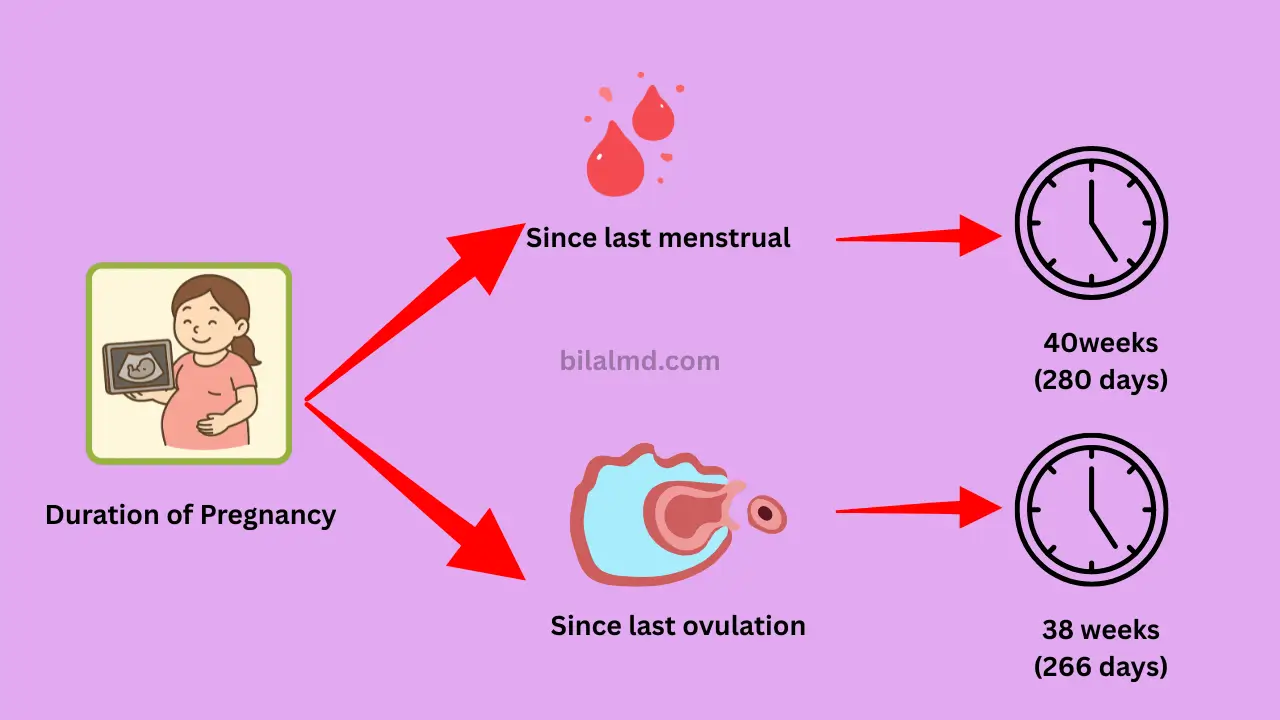
What is the average cycle length?
Average cycle length varies from body to body. Most females have 28 days or 29-day cycle. You have to record your own cycle length. If you have periods one week earlier or 1 week late its normal. If you have polycystic ovarian syndrome (PCOS), you should see a doctor. I have seen females with 40-day cycles too in my clinic that normal too.
What is the fertility window?
The fertility window is just a time period or number of days during which getting pregnant is very high. This time period 6 comes before the ovulation and 5 days after the ovulation. Keep in mind sperm can survive 5 days in the female body, so if you are trying to conceive, start trying as you come in the fertility window.
Menstrual cycle takes place in follicular, ovulation, and luteal phase
Menstrual cucle is divided into thre phases are as follows;
- Follicular phase
- Ovulation phase
- Luteal phase
1. Follicular phase
The follicular phase is the first phase in which follicles releases but also menses come first. Menstruation and the follicle release event overlap. After 13 days It ends with the ovulation phase. The hypothalamus signals the pituitary gland to release follicle-stimulating hormone (FSH), ovaries release 5 to 20 small sacs called follicles (immature eggs) for fertilization. Only one follicle matures (egg) and gets ready to fuse with the sperm, and the others disintegrate(reabsorbed) in the body. The mature follicle spikes estrogen levels that thicken the lining of the uterus and provide nutrients environment for the embryo to grow. An egg waits only 12 to 24 hours in the body.
2. Ovulation phase
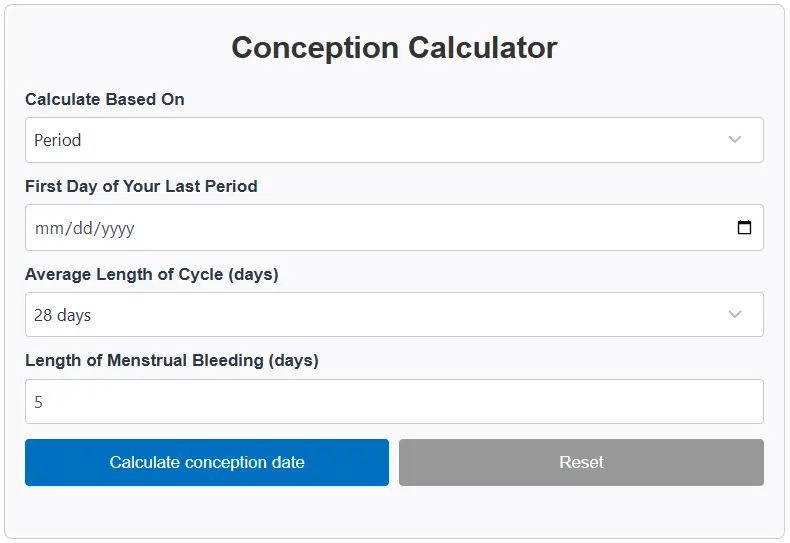
Estrogen signals luteinizing hormone to start ovulation. In ovulation ovary releases a mature egg and waits for the sperm to fertilize it. If the cycle is 26 days, the day of ovulation will be day 13. If you don’t remember the day of ovulation, we have a conception calculator so you will know your best days to conceive.
3. luteal phase
Body prepare for pregnancy in this phase. If she is pregnancy than there is no shedding of the uterus wall, and hCG will be produced, but if there is no pregnancy, then the estrogen and progesterone reduces and the uterus wall will shed.
What are the signs of next period?
Now consider a female who is not pregnant, then she will go through the following signs that are follow;
- Breast tenderness
- Mood swings
- Bloating
- Acne
- Vaginal discharge
- Temperature changes
1. Breast tenderness
Most females breast tender or sore before or after their periods because of hormonal spikes.
2. Mood swings
As there is up and down of hormones, her mood changes drastically. She can have Premenstrual syndrome (PMS) like cramps, feeling bloated, food cravings, depression, anxiety, lower sex drive, feeling tired, mood swings that are normal in periods. She can relax at home or go for exercise.
3. Bloating
Before or during menses, the progesterone levels are lower, which causes water retention in the body, and cervical mucus dries up.
4. Acne
Hormone fluctuation can affect the sweat-producing glands, such as sebum. When they are triggered, acne bumps appear on the lower face area that will resolve after menses.
5. Cramps
During menses, the womb sheds, that cause the period pain if the female is unable to bear the pain; then that condition is called dysmenorrhea. Around 60% female experience menstrual pain, and 5 % to 15% experience so severe pain that they cannot perform daily activities. You can use heating pads and also visit a doctor.
6. Vaginal discharge
Before the menses, there is high progesterone that causes cloudy white discharge.
7. Temperature changes
Before and after, there is a shift in temperature, so keep in mind it can be due to menses or pregnancy.
Prevent pregnancy hormones
You should pattern in the body like the rise of body temperature. At that time, you should use preventive methods or birth control.
What are the signs of late period?
Following are the signs of late period;
- Pregnancy
- Stress
- Weight change
- Medical condition
- Menopause
1. Pregnancy
Pregnancy is the main thing that delays periods. You should do a pregnancy test after 8 days
2. Stress
Chronic stress disrupts hormone balance. Try some relaxing exercise or consult a doctor.
3. Weight change
Sudden weight changes can delay periods. Talk to a doctor if needed help.
4. Medical condition
Hormonal fluctuation may trigger acne, red bumps on the skin.
5. Menopause
After the age of 40, periods start to delay(perimenopause), and eventually, after the 50s, they stop.
How do I know if I have irregular periods?
If periods occur before 21 days or more than 35 days, one cycle can be 36 and the next can be 26 days. If irregular periods, no pain that occurs in 14 to 25% female.