This article teaches you how to use a free water deficit calculator to plan safe correction of hypernatremia. You will learn which inputs to enter, how to choose the target sodium, how to interpret the output in liters, and how to turn that number into a practical replacement plan. You will also learn safe correction limits, common pitfalls, and quick checks you can do at the bedside.
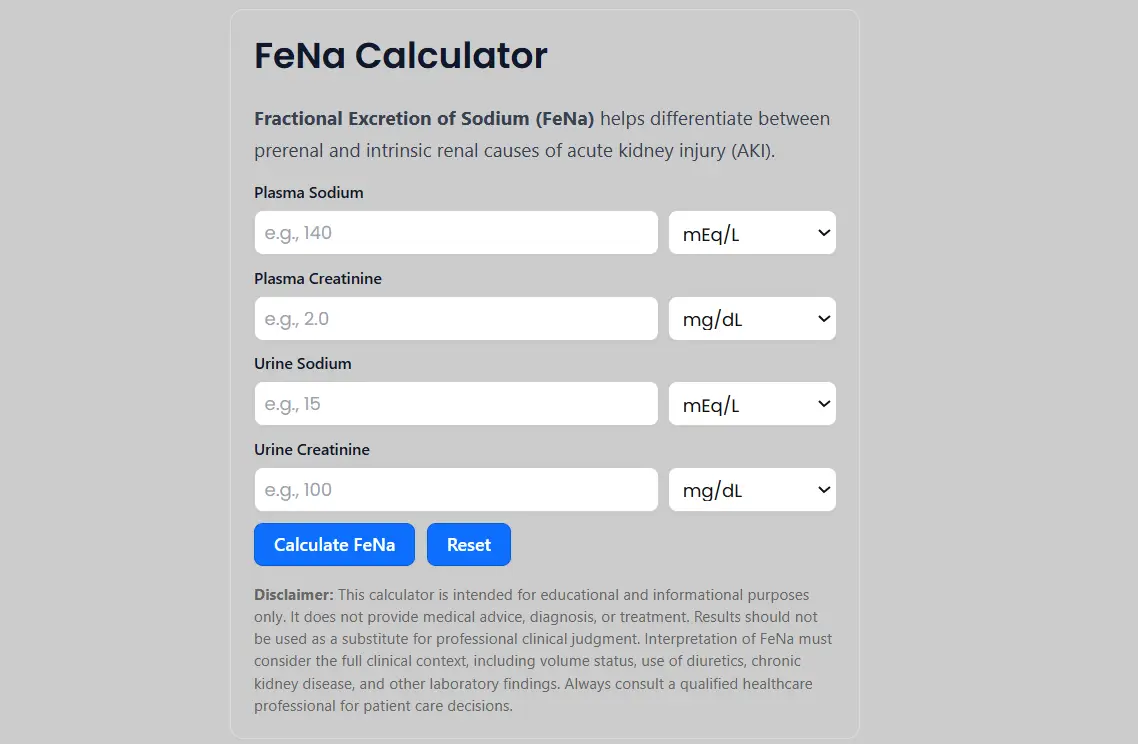
You can follow along using the free water deficit calculator on BilalMD while you read.
By the end, a medical student or a busy clinician will be able to gather the right values, run the calculation in seconds, set a realistic goal sodium, and map the liters to a time based plan that respects neurologic safety limits. These steps mirror common hospital handbook methods and open access reviews.
What this measurement means in medicine
Water deficit is an estimate of the pure water the body is missing when serum sodium is above normal. Hypernatremia means water deficit relative to total body solute. The calculator estimates total body water from weight and a factor based on age and sex. It then compares the current sodium to a goal sodium and tells you how many liters of free water would close that gap if all else stayed equal. In practice you add clinical judgment, you correct slowly, and you reassess often.
Common unit labels in this topic include kilograms for weight, liters for total body water and deficit, and milliequivalents per liter or millimoles per liter for sodium. For monovalent ions such as sodium, milliequivalents per liter and millimoles per liter are numerically the same, so you can enter either label as long as you keep the numbers consistent.
Two short examples of how a calculator saves time. First, it applies the total body water fraction for you and prevents arithmetic slips when you are rushed. Second, it displays a single liter value you can place into a plan across forty eight to seventy two hours, aligned with commonly cited correction rates for safety.

Unit conversions you will use most
One milligram per deciliter to micromole per liter is not needed here because the calculator only uses sodium, but remember that sodium in milliequivalents per liter equals sodium in millimoles per liter for this monovalent ion. Use this when labs alternate unit labels on printed reports.
If you are reviewing ventilator or monitoring devices at the same time, you may see pressure units that are not part of this calculation but appear in the same workflow.
One millimeter of mercury equals about zero point one three three kilopascal. Use this to translate an arterial line report that lists pressure in kilopascal.
One pound per square inch equals about six thousand eight hundred ninety four point seven six pascal. Use this for oxygen system or device specifications during transport planning when you are also treating hypernatremia.
You can safely ignore pressure conversions for the deficit calculation itself, since all inputs are weight and sodium.
How to use the calculator correctly
Follow this numbered workflow on the BilalMD page. It matches the standard formula free water deficit equals total body water multiplied by open bracket current sodium divided by goal sodium minus one close bracket.
- Enter weight and choose kg or lb. If you choose pounds, the tool converts to kilograms automatically. Use an estimated dry weight when edema or fluid overload is present.
- Select age range and sex. The calculator uses typical total body water fractions such as zero point six for adult men, zero point five for adult women, and slightly lower factors in older adults. In children the common factor is around zero point six.
- Enter current sodium. Use the latest chemistry value. For sodium, milliequivalents per liter equals millimoles per liter numerically.
- Enter a goal sodium. For most chronic or unknown duration hypernatremia, choose a goal that reduces sodium by no more than about ten milliequivalents per liter in the first day. Your goal will often be one hundred forty, but the formula works with any safe goal you set.
- Click Calculate. The result shows estimated total body water and the free water deficit in liters.
- Apply safety limits to your plan. Common references suggest a decrease in sodium of about zero point five milliequivalents per liter per hour, not more than ten to twelve milliequivalents per liter per day, with total correction over about forty eight to seventy two hours in chronic or unknown duration cases.
- Cross check with a quick mental estimate. A simple bedside form is total body water multiplied by open bracket current sodium minus goal sodium close bracket divided by goal sodium. The calculator already does this, but the mental form helps you spot errors.
- Translate liters into a time based prescription. Divide the deficit by the planned hours of correction to get a starting hourly free water rate. Remember to also replace ongoing losses and to reassess often. The correction fluid may be enteral water, intravenous dextrose five percent, or other hypotonic strategies per local protocols. Monitor sodium every two to four hours during the early phase.
Try our free water deficit calculator
Notes on precision and context
Choosing the correct unit set. Keep sodium units consistent. Do not mix values from different draws without clear reason.
Significant figures. Whole numbers for sodium are fine. Do not over round the liters because small differences can add up over many hours.
Gauge versus absolute. This distinction applies to engineering pressure displays and does not change the calculation of water deficit.
Albumin or glucose corrections. Some references adjust measured sodium for severe hyperglycemia before calculations. If hyperglycemia is present, apply your local corrected sodium method first, then calculate the deficit.
Mini tutorials for common medical tasks
Calculate a basic water deficit and map a safe plan
- Numbers: Adult man, seventy kilograms, current sodium one hundred sixty, goal sodium one hundred forty.
- Steps: Enter seventy kilograms, adult, male. Enter current sodium one hundred sixty and goal sodium one hundred forty. Click Calculate.
The tool estimates total body water about forty two liters using zero point six times weight and shows a deficit near six liters calculated as total body water multiplied by open bracket one hundred sixty divided by one hundred forty minus one close bracket. Plan to correct about two to three liters per day over forty eight to seventy two hours with close monitoring, not exceeding about ten per day fall in sodium.
Adjust for elderly or low total body water states
Numbers
Elderly woman, sixty kilograms, current sodium one hundred fifty five, goal one hundred forty five.
Steps
Choose elderly and female which applies a factor near zero point four five to zero point five depending on your reference. The calculator uses these common values for you. The lower total body water yields a smaller deficit than an adult male of the same weight, which better reflects physiology. Use the same safety limits on correction.
Translate liters into an hourly free water rate
Numbers
Deficit four liters, plan forty eight hours.
Steps
Four liters divided by forty eight hours equals about eighty three milliliters per hour of pure water, before losses. If you give intravenous dextrose five percent, remember that each liter delivers about one liter of free water once glucose is metabolized. Add replacement for ongoing free water losses such as fever, diarrhea, or high insensible loss. Recheck sodium every two to four hours early in therapy and adjust.
Quick sanity check if the output looks too large
If the displayed deficit would require more than about three liters per day over three days, recheck weight, age range, and the goal sodium you entered. A goal of one hundred forty may be too ambitious on day one if the starting sodium is very high. Consider a more conservative day one goal and plan staged correction.
Common mistakes and fast fixes
Using a goal sodium that implies a fall greater than about ten to twelve in twenty four hours. Fix. Lower the goal and extend the time window.
Forgetting to account for ongoing losses. Fix. Add estimated losses to the hourly prescription and keep reassessing.
Mixing values from different times without noting the change. Fix. Use labs from the same clinical window or document the reason for mixed times.
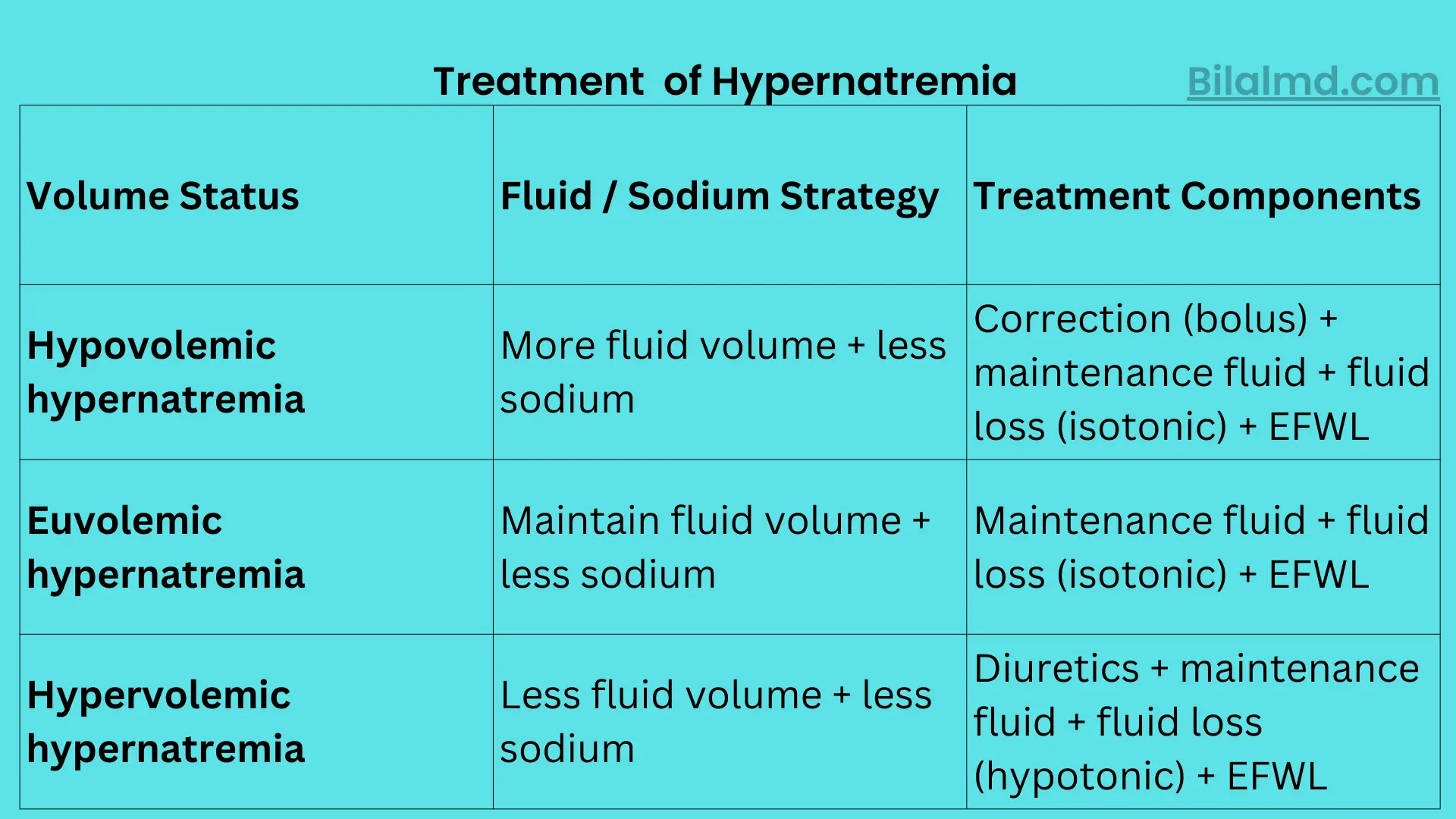
Assuming the deficit is the only fluid to give. Fix. Correct shock with isotonic fluid first, then replace free water once perfusion is stable.
Rounding the weight or fractions too aggressively. Fix. Use the calculator numbers as displayed and round only at the final step for orders.
Field notes for busy clinicians
Write the plan as a single clear line that names liters, fluid type, time frame, and monitoring plan. Example. Enteral water two liters per day over three days with sodium checks every four hours.
Do not chase a perfect number. Stay within safe correction rates and adjust to the trend rather than to one target.
When large deficits are present, consider a scheduled reassessment huddle at six to eight hours to align nursing, pharmacy, and the primary team.
If diuresis or gastrointestinal losses are significant, place a separate order set to replace ongoing losses milliliter for milliliter and keep it visible in the note.
Consider bedside ultrasound for volume status and a nursing checklist for sodium monitoring intervals to prevent silent over correction.
FAQ
How to calculate free water deficit
Use free water deficit equals total body water multiplied by open bracket current sodium divided by goal sodium minus one close bracket. Total body water is weight in kilograms multiplied by a fraction such as zero point six for adult men and zero point five for adult women. The calculator applies these fractions for you and displays the liters to replace.
How do you calculate free water deficit in hypernatremia
Enter weight, age range, and sex to estimate total body water. Enter the current sodium and a safe goal sodium. Click Calculate to get the liters. Then plan a correction that reduces sodium by about ten per day or less, usually over forty eight to seventy two hours for chronic or unknown duration cases. Monitor sodium every two to four hours early in therapy.
How to calculate water deficit in hypernatremia
A quick mental form is total body water multiplied by open bracket current sodium minus goal sodium close bracket divided by goal sodium. The web tool already uses this format and avoids arithmetic errors. Select a realistic goal sodium and keep safety limits in mind.
How to calculate water deficit in dehydration
The same formula applies because dehydration often underlies hypernatremia. Estimate total body water with the age and sex fraction, pick a reasonable goal sodium such as one hundred forty, and compute the liters. Replace slowly and reassess frequently. Correct circulation first if the patient is in shock, then replace free water.
Conclusion and next steps
You can now use a free water deficit calculator correctly and safely. Choose the right total body water factor by age and sex. Enter current and goal sodium. Read the liters, then design a schedule that respects neurologic safety. Verify one example by mental math. Add replacement for ongoing losses. Monitor sodium frequently and adjust to the trend.
Action list
Pick the correct unit and fraction on the calculator page.
Run two practice cases and check the answers with the mental formula.
Save a default goal sodium such as one hundred forty in your note template.
Verify one plan against the safety rule of about zero point five per hour and ten per day.