Estimating when your baby is due is one of the first questions expectant parents ask. The most common way to calculate your estimated due date (EDD) is by using the date of your Last Menstrual Period (LMP). If you’re worried about figuring this out or have irregular cycles, don’t worry – we understand the confusion and will guide you through the process. In this article, we explain how due dates are calculated based on LMP, why it’s important, and what to do if your situation is a bit different. By the end, you’ll know exactly how due dates work and how our handy conception calculator tool can help you plan for your new arrival.

How Is the Due Date Calculated from Your LMP?
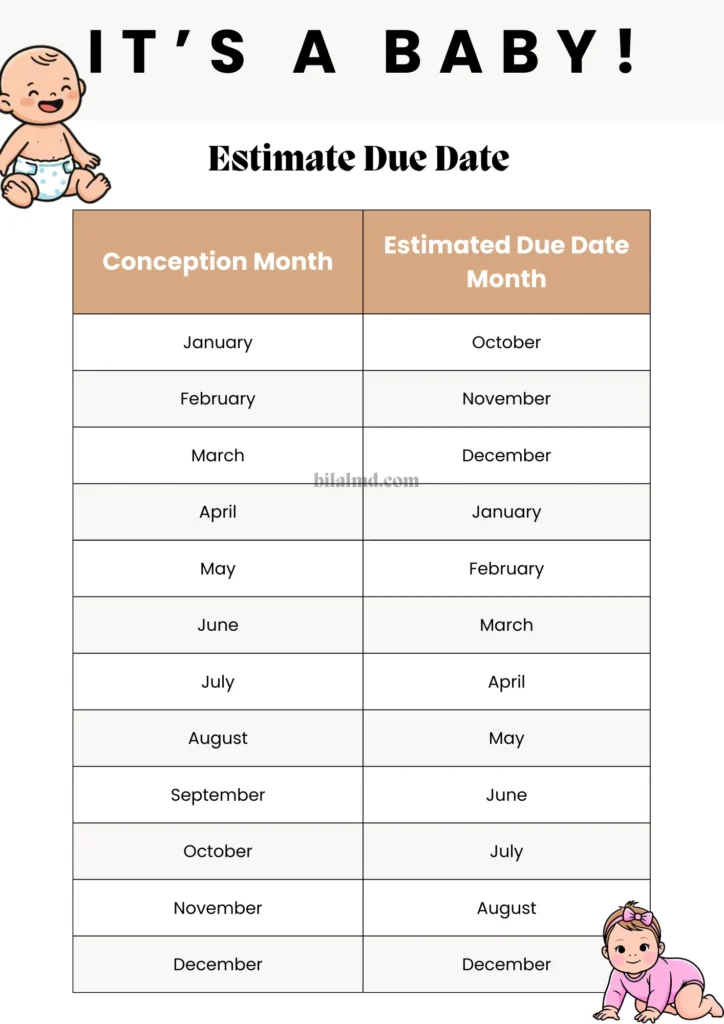
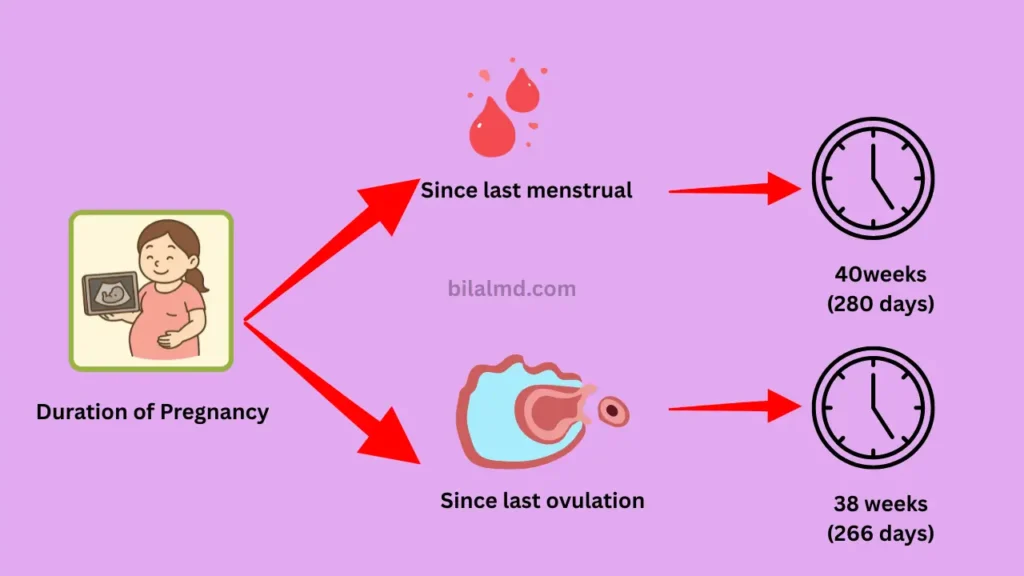
Healthcare providers typically calculate your due date by adding 280 days (40 weeks) to the first day of your last normal menstrual period. This method (known as Naegele’s rule) assumes a 28-day menstrual cycle with ovulation around day 14. In practical terms, you can do this calculation yourself:
- Step 1: Take the first day of your last period.
- Step 2: Add 7 days to that date.
- Step 3: Count back 3 months (and add a year if needed).
For example, if your last period started on February 1st, adding 7 days gives February 8th, then counting back 3 months results in a due date around November 8th. Many online calculators (including ours) will do this math instantly. Keep in mind this due date is an estimate – pregnancy is considered full-term at anywhere from 37 to 42 weeks after the LMP, so the exact day can vary.
Cycle Length Adjustments: The standard LMP method assumes a 28-day cycle. If your cycle is shorter or longer than average, it can shift the due date slightly. For longer cycles (e.g. 35 days), you might ovulate later, meaning your due date would be a few days later than the 280-day rule; the opposite is true for shorter cycles. Some due date calculators allow you to input your typical cycle length to adjust the prediction. In any case, the first trimester ultrasound will often confirm if the LMP-based date is accurate (more on that below).
Why Start the Count from Last Period, Not Conception? It surprises many people that by the time you miss a period and know you’re pregnant, you’re already considered about 4 weeks pregnant even if you conceived only 2 weeks ago. This is because the pregnancy countdown begins from the LMP – essentially counting those two weeks before ovulation as part of the 40 weeks. Using LMP provides a standardized starting point for everyone, since the exact conception date is often unknown.

If You’re Unsure of Your LMP or Have Irregular Cycles
Not everyone remembers the exact date of their last period, and some have irregular menstrual cycles that make dating tricky. If you cannot recall your LMP or your periods are irregular, determining the due date by LMP alone can be difficult. In these cases, healthcare providers turn to other methods to establish how far along the pregnancy is.
Early Ultrasound Dating: An ultrasound exam in the first trimester is a very useful tool for dating a pregnancy. A baby can be measured on ultrasound as early as 5–6 weeks after the LMP, and these early measurements are the most accurate for estimating gestational age. During your first prenatal appointment (often around 8–12 weeks), your provider will perform an ultrasound to confirm or adjust your due date. If the ultrasound indicates a significantly different gestational age than the LMP calculation, the due date may be updated. For example, doctors have guidelines (based on how far along you are) for when to prefer the ultrasound date over the LMP date – if there’s more than about a week difference in early pregnancy, the ultrasound date is usually considered more reliable. Don’t be surprised if your due date shifts slightly after a scan; this is normal.
Other Clues for Dating Pregnancy: In addition to ultrasound, doctors may use a physical pelvic exam in the first trimester to estimate gestational age – the size of the uterus can give clues, though this is less precise. Also, the pregnancy hormone hCG in blood tests can suggest how far along you are (since hCG is detectable about 3–4 weeks after conception). These methods are supporting pieces of the puzzle when LMP info is unclear. Ultimately, the earliest ultrasound remains the gold standard for confirming the due date.
Calculating the Due Date if You Know Conception Date or IVF
Sometimes, you might actually know the exact date of conception. This can happen if you were tracking ovulation, underwent fertility treatments, or had in vitro fertilization (IVF). In such cases, the due date calculation is adjusted accordingly.
- Known Ovulation or Conception Date: If you know when you likely ovulated or the day intercourse/fertilization occurred, you can calculate the due date by adding 266 days to the conception date. (Why 266 instead of 280? Because 266 days = 38 weeks, which is the length of pregnancy counting from conception, whereas 280 days/40 weeks counts from the LMP about two weeks earlier.) Our calculator allows you to enter the conception date to get an estimated due date as well.
- IVF Transfer Date: In IVF, the embryo’s age at transfer is taken into account. If you had a five-day embryo transfer, your due date is about 261 days from the transfer date. For a three-day embryo transfer, count 263 days from the transfer date to find the due date. Essentially, the IVF clinic or your doctor will give you an EDD based on the embryo transfer schedule. It’s always a good idea to have your provider confirm the due date, but generally these calculations are quite precise for IVF pregnancies.
- Artificial Insemination (IUI): Similarly, if you underwent an intrauterine insemination and know the exact insemination date, you can use that as the conception date and add 266 days. Women who conceive with such planned methods typically have very clear conception timing.
In all these special scenarios, provide these details to your healthcare provider. They will still often perform an early ultrasound to confirm that the growth of the baby matches the calculated gestational age.

How Accurate Is the Due Date? (Why Your Date Might Change)
It’s important to remember that the due date is only an estimate, not a guarantee. In fact, only about 5% of babies are born on their exact due date. Most births happen within a week before or after the EDD. One large study showed that fewer than 4% of births occur on the predicted due date, while about 90% occur within ±2 weeks of it. This is why doctors consider a pregnancy full term once you hit 37 weeks – your baby might decide to arrive anytime between 37 and 42 weeks and it’s considered normal.
There are many factors that can influence the actual timing of birth. Every pregnancy is different, and natural variation means we cannot pinpoint the exact day of delivery far in advance. Your due date might even be adjusted during pregnancy based on new information. For example, if a mid-pregnancy ultrasound suggests the baby is not as far along as previously thought, or much farther along, your provider may revise the due date by a few days to a week. This is perfectly routine – it doesn’t necessarily mean anything is wrong, just that dating is being fine-tuned.
Carrying Multiples: If you are pregnant with twins or multiples, the due date is calculated the same way (40 weeks from LMP), but keep in mind that multiples rarely go to 40 weeks. Twin pregnancies often deliver around 36–37 weeks, and triplets may come even earlier. Your doctor will still give you a 40-week due date, but will also prepare you to expect an earlier birth for the safety of you and the babies. In other words, the concept of “due date” still applies, but the timing of delivery is adjusted in practice for multiples.
The bottom line is that your due date is a target for the onset of labor, not a deadline. It’s wise to be ready a couple of weeks before and after that date. Your provider will monitor your progress as you approach the due date and may discuss options if you go too far past it. But for most pregnancies, going into labor anytime in that 5-week full-term window (37 to 42 weeks) is completely expected.
Why Knowing Your Due Date Is Important
Having an estimated due date helps you and your healthcare team plan the journey of your pregnancy. This date is used to schedule important prenatal tests and ultrasounds at the right times, such as the mid-pregnancy anatomy scan around 18–20 weeks, and to monitor that baby’s growth is on track. It also allows you to prepare practically and emotionally: you can start counting down the days, make arrangements for maternity leave, and get your home ready for the new baby’s arrival. While the due date is not set in stone, it provides a helpful timeline for these preparations and for your obstetric care.
If your due date changes or if you’re told you might deliver early (for example, with twins or if there are medical indications), having that discussion with your provider allows you to adjust your plans accordingly. Always use the due date given by your doctor or midwife as the official date for planning, since they will base it on the best available information (often confirmed by ultrasound).
Using an Online Due Date Calculator for Quick Answers
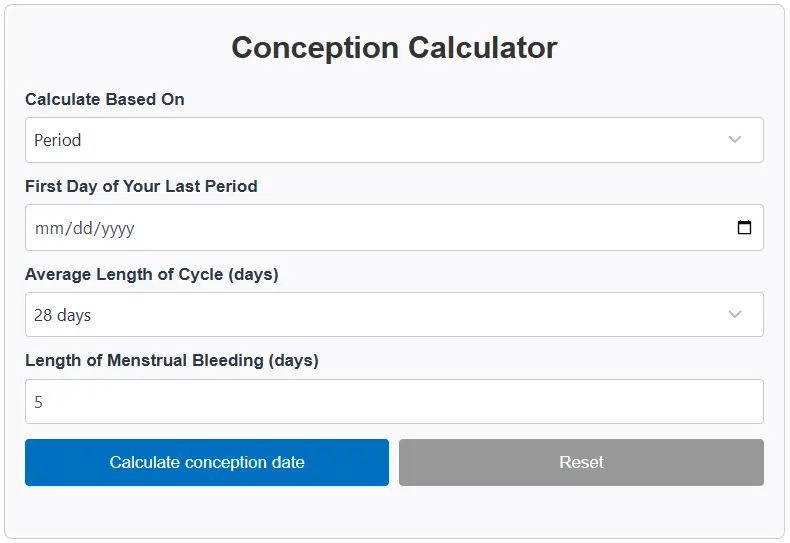
Figuring out dates and doing calendar math can be tedious, especially given factors like leap years or varying month lengths. This is where an online due date calculator (like our Conception Calculator) comes in handy. With just a couple of inputs – typically the first day of your last period (and optionally your cycle length) – you can instantly get your estimated due date. Our tool will also provide you with today’s gestational age (how far along you are right now) and even an estimated conception window. This saves you time and provides reassurance by double-checking the math.
Online calculators are a convenient starting point for estimating your due date and learning what week of pregnancy you’re in. Many calculators, including ours, can also work in reverse (sometimes called a **“reverse due date” calculator) – for instance, if you already know your due date from an ultrasound, you can find out roughly when you likely conceived by subtracting 266 days. This is useful if you’re curious about which day intercourse led to pregnancy, though remember it’s still an estimate because sperm can live for up to 5 days inside the body and conception could occur a few days after intercourse.
Important: While a calculator gives you a good estimate, it does not replace medical advice. Always have your due date confirmed by a healthcare provider. They will use the calculator result as a reference but will rely on clinical methods (like an ultrasound measurement) for the final due date. Once confirmed, you should use the due date from your provider as the basis for all your pregnancy care and planning.
Conclusion
Calculating a due date based on LMP is a standard and helpful way to predict when your baby might arrive. By understanding how the calculation works and its limitations, you can better appreciate the timeline of your pregnancy. Remember that the due date is an estimate – a healthy baby can arrive a little before or after that date. Use our online due date/conception calculator as a supportive tool to guide your expectations and preparations. And be sure to keep in close contact with your doctor or midwife, who will ensure your estimated date is accurate and help you navigate each exciting week of your pregnancy.