
Yes, you can eat jackfruit during pregnancy. Pregnancy is an enchanting process filled with joy, anticipation, and changing cravings. Jackfruit during pregnancy is generally safe if you eat it in limited quantity. This tropical fruit—beloved across Asia and Africa—is known for its peculiar texture, bold aroma, and distinct taste. You can enjoy jackfruit raw or cooked, and it’s also used to make tasty snacks that help fight hunger pangs. Since it’s rich in nutrients, it may support healthy energy levels and help prevent anemia, which is important for many expecting moms. We have a miscarriage risk calculator that will let you know which actually causes it.
What is Jackfruit Artocarpus heterophyllus
Pala pazham (jackfruit) is primarily enjoyed in South India and is believed to have originated in South Asia and Southeast Asia. It has a green outer skin with yellow pods inside, and even the seeds are used in many home recipes. Naturally sticky and sweet, people enjoy eating it raw or cooked in a variety of dishes. Botanically, it belongs to the same family as figs and mulberries, which is one reason it has such a unique texture and flavor. It also provides key nutrients, including calcium, iron, potassium, and various vitamins, making it a popular fruit in traditional diets.
Is Jackfruit Good for Pregnancy?
When consumed correctly, jackfruit can be a nutritious choice in pregnancy because it contains many essential vitamins and minerals. This fruit has been a staple in Southeast Asian and East African diets for generations, and it’s valued for its filling texture and natural sweetness. For expecting moms, the key is moderation and balance—enjoying jackfruit as part of a varied diet rather than overeating it.
Can Pregnant Women Eat Jackfruit During Specific Trimesters?
Yes—in small amounts. Jackfruit isn’t a dangerous fruit, but it should be consumed in moderation. In pregnancy, some people may feel gas, bloating, or stomach discomfort after eating it. This depends on your body type and how well you digest the fruit. If you’re trying it for the first time during pregnancy, start with a small portion.
First Trimester (Weeks 1–12)
This phase is more sensitive—nausea, acidity, and bloating are common. Many women also develop a distaste for certain foods. If your stomach tolerates it, a small serving of jackfruit can work as a snack, but large portions may feel heavy and worsen bloating.
Second Trimester (Weeks 13–27)
This is a key growth period for the fetus, and energy levels are usually better. Moderate jackfruit intake is generally well tolerated in this trimester, especially if you’ve already been eating it without discomfort.
Third Trimester & Ninth Month (Weeks 28–Delivery)
Digestion often slows again as the baby grows bigger. Excessive consumption may lead to diarrhea, gas, or stomach discomfort, along with bloating or heaviness. Small servings are okay, but avoid eating it close to bedtime to reduce nighttime discomfort.
Raw Jackfruit vs Ripe Jackfruit in Pregnancy
Ripe Jackfruit
Ripe jackfruit is sweeter, easier to digest, and often a better choice during pregnancy, especially if you’re dealing with nausea or a sensitive stomach. A small serving can satisfy cravings without feeling too heavy.
Raw Jackfruit
Raw jackfruit is high fiber and can feel heavier on digestion. For some pregnant women, it may cause gas or discomfort, particularly if eaten in large portions or when digestion is already slow (like late pregnancy). If you enjoy raw jackfruit dishes, keep the portion small and notice how your body responds.
Can Pregnant Women Eat Jackfruit Biryani?
Yes. If it’s made hygienically and eaten in a moderate portion, jackfruit biryani can be fine during pregnancy. If you’re prone to acidity or bloating, avoid very spicy or oily versions.
Can Pregnant Women Eat Jackfruit Chips?
Yes—prefer baked or air fried jackfruit chips instead of deep-fried. They’re a lighter option, but still watch portions because packaged chips can be high in salt or oil.
Can Pregnant Women Eat Jackfruit Vegetable?
Yes. Raw jackfruit is commonly cooked as a jackfruit vegetable (sabzi/curry). Since it’s heavier, it’s best to eat it in a moderate portion and pair it with lighter sides to reduce gas or discomfort.
Choosing and Preparing Jackfruit
To get the best results in pregnancy, make sure the jackfruit you consume is ripe and properly prepared, since it offers a range of health benefits when eaten the right way. Ripe jackfruit is naturally sticky and sweet, and people enjoy eating it raw or cooked in different dishes. A simple option is enjoying ripe jackfruit bulbs as a snack or light dessert, especially when you want something filling without a heavy meal.
On the other hand, unripe jackfruit can cause digestive issues for some people and is often avoided during pregnancy, particularly if you already struggle with gas, bloating, or stomach sensitivity. If you do eat jackfruit in cooked meals, choose clean, well-cooked preparations and keep portions moderate so it feels light on digestion.
Nutrient Value of Jackfruit
Jackfruit provides essential nutrients such as vitamin C, vitamin A, potassium, and dietary fiber, which can support your overall health and well-being during pregnancy. Vitamin C supports immune function and collagen production, while vitamin A is essential for fetal development. Potassium helps regulate blood pressure and fluid balance—useful if pregnancy brings hypertension concerns. Meanwhile, dietary fiber can help prevent constipation, which is common during pregnancy.
It also contains key micronutrients, including calcium, iron, potassium, and various vitamins, along with vitamins A, B, and C that help support everyday nutritional needs. Jackfruit is often described as having fewer calories and less fat compared to many heavy snacks, so it can fit into pregnancy diets when eaten in moderation and paired with other whole foods.
Beyond basic vitamins and minerals, jackfruit has phytonutrients, plus iron, folate, niacin, calories, and vitamin B, which may help strengthen the immune system and support healthy blood pressure when part of a balanced diet. Folate is especially important because it helps form red blood cells and reduces the risk of spina bifida, neural tube defects, and anencephaly in babies. In addition, calcium, magnesium, and potassium in jackfruit contribute to bone health while supporting your baby’s skeletal system, potentially lowering the risk of osteoporosis over the long term.
| Nutrient | Amount per 100g |
|---|---|
| Potassium | 191.0 – 407.0 mg |
| Vitamin C | 7.0 – 10.0 mg |
| Vitamin A | 175.0 – 540.0 mcg |
| Protein | 1.2 – 1.9 g |
| Carbohydrates | 16.0 – 25.4 g |
| Calcium | 20.0 – 37.0 mg |
| Magnesium | 27.0 mg |
| Sodium | 2.0 – 41.0 mg |
| Calories | 94 cal |
| Fat | 0.1-0.4 g |
| Dietary Fiber | 1-1.5 g |
| Iron | 0.23 mg |
| Folic acid | 24mcg |
| Vitamin E | 0.34mg |
| Niacin | 0.920mg |
| Riboflavin | 0.055mg |
| Pyridoxine | 0.329mg |
| Thiamin | 0.105mg |
| Phosphorus | 21mg |
| Zinc | 0.13mg |
g=grams; mg=milligrams; mcg=micrograms
Health Benefits and Considerations
Jackfruit can be a good source of antioxidants, which help protect your cells from damage and may reduce inflammation. This matters in pregnancy because inflammation and oxidative stress—often linked with maternal stress and anxiety—can affect both maternal and fetal health. Jackfruit contains antioxidants like carotenoids and flavonoids that may help reduce oxidative stress when included as part of a balanced diet.
Considerations: even though jackfruit is generally safe in moderation, it can feel heavy for some people and may cause gas, bloating, or stomach discomfort, especially if digestion is sensitive. The safest approach is to choose ripe, properly prepared jackfruit, keep portions small, and see how your body responds—particularly if you’re trying it for the first time during pregnancy.
Immunity support when you need it most
During pregnancy, your immune system changes and you may become more susceptible to infections. Jackfruit can help as an immune booster because it contains vitamin C, a key nutrient for immune function. In fact, just one serving can provide about 10–15% of your daily vitamin C needs, making it a simple, food-based way to support immunity—especially when you need it most.
Natural constipation relief
Constipation is one of the most common pregnancy complaints. Jackfruit can help because it contains dietary fiber, which supports digestion and helps maintain regular bowel movements. The key is to eat it in moderation and drink enough water so the fiber works effectively and doesn’t add to bloating.
Sustained energy without the crash
Jackfruit contains complex carbohydrates that support a more steady energy release instead of a quick spike and crash. This can be especially helpful during the second trimester, when your activity level often increases, and again in the third trimester, when fatigue commonly returns. In moderation, it can work as a filling snack that helps you stay energized longer.
When Should You Avoid Jackfruit During Pregnancy
Jackfruit is usually fine in moderation, but there are situations where it’s better to avoid it or check with your doctor—especially if you notice symptoms after eating it.
Traditional beliefs (sticky texture myths)
Some beliefs say foods with a sticky texture, like tender jackfruit, should be avoided because they might interfere with clearing vernix (the waxy coating) from a newborn, or that jackfruit’s sticky sap could “accumulate in the womb” and make childbirth difficult. There are also claims about fetal abnormalities. These are cultural beliefs rather than proven medical facts, but if such foods make you feel unwell, it’s reasonable to avoid them.
If you have gestational diabetes (or blood sugar concerns)
Jackfruit has a moderate glycemic index and contains natural sugar, so portions matter a lot. If you’re diabetic, have gestational diabetes, or your doctor advised strict sugar control, limit or avoid it. Watch for blood sugar fluctuations (feeling tired or jittery), especially if you eat jackfruit on an empty stomach. Pairing a small portion with protein/fiber-rich foods may be easier on blood sugar.
If you have gastric problems
If you often feel bloated, have acidity, stomach gas, hyperemesis gravidarum, or severe acid reflux, jackfruit may worsen symptoms. Unripe/green jackfruit can be heavier and may lead to bloating, gas, or loose stools, especially if you’re prone to IBS.
If you have known allergies
Avoid jackfruit if you’ve had an allergic reaction to jackfruit, or related fruits like figs or mulberries. People with birch pollen allergies may react due to cross-reactivity, and latex sensitivity can also be relevant. Symptoms can include skin itching, swelling around the mouth, and in severe cases difficulty breathing. If you’ve never eaten jackfruit before, try a very small amount first and wait to see how you feel.
If you have blood disorders or clotting concerns
Some sources claim jackfruit can increase blood coagulation. If you have any blood disorder, clotting condition, or you’re on blood-related medications, it’s safer to avoid jackfruit unless your clinician says it’s fine.
If you’re on certain medications or supplements
Medication interactions can occur, particularly if you’re taking antihypertensive medications or potassium supplements. Since jackfruit contains potassium, it could potentially amplify effects and contribute to low blood pressure in some cases—so check with your doctor if you’re on these.
If weight management is a concern
If your clinician has advised strict weight management, keep portions small. Jackfruit is filling and nutritious, but frequent large servings can add extra calories and sugar.
Common Myths About Jackfruit During Pregnancy
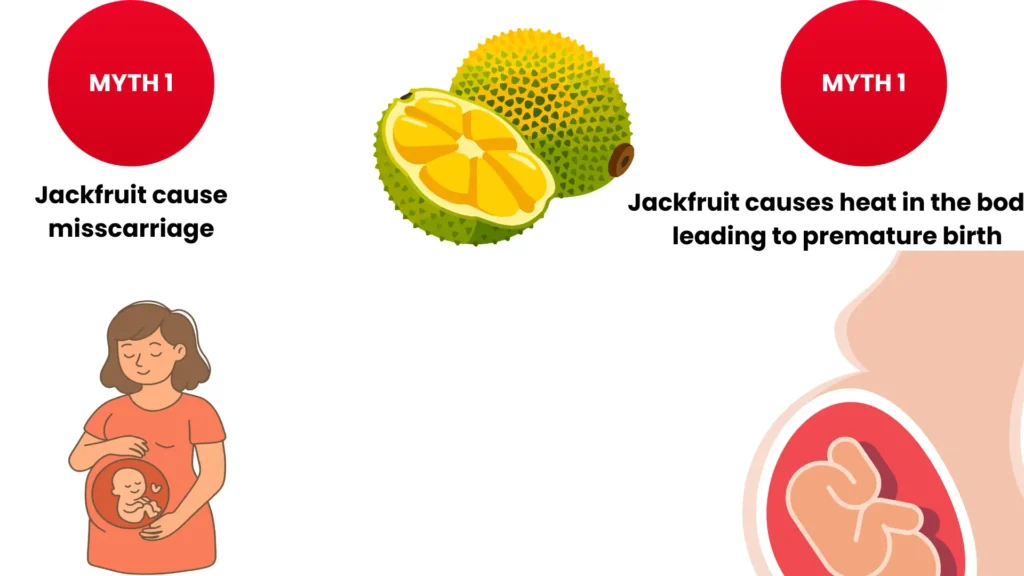
Old beliefs can make jackfruit look like a risky food during pregnancy. These beliefs are not random—many come from traditional food classifications (like “heat-producing” foods in Ayurveda) and from the fact that pregnancy symptoms (gas, heaviness, cramps) can be misread as something more serious. But most claims don’t match what science currently shows.
Myth 1: “Jackfruit during pregnancy causes miscarriage.”
There is no scientific proof that jackfruit causes miscarriage. It will not affect your baby negatively when eaten in moderation, and no active compounds in jackfruit are known to trigger uterine contractions. Miscarriages most commonly happen due to chromosomal reasons, not because of a normal fruit eaten occasionally.
Myth 2: “Jackfruit creates too much heat in the body.”
Jackfruit is often considered a heat-producing fruit in Ayurveda, but eating 2–3 pods is unlikely to harm you. If you feel “heat” symptoms (thirst, acidity), balance it by having it with curd or by drinking more water. The real issue is usually overeating, not the fruit itself.
Myth 3: “Jackfruit seeds are unsafe.”
Jackfruit seeds are rich in protein and can be safely eaten after boiling or roasting—but they should not be eaten raw. They also contain nutrients like iron (Fe) and antioxidants. Many people use boiled seeds or ground roasted seeds to thicken gravies and curries. As with the fruit, don’t overeat.
Myth 4: “Jackfruit induces labor.”
Jackfruit does not lead to labor. What can happen is abdominal discomfort (gas, bloating, heaviness), which some women confuse with labor-like tightening. That’s a digestion reaction, not true contractions.
Practical, pregnancy-friendly way to eat it
- 3–5 jackfruit pods in one serving
- Not every day
- Best eaten during the day (not close to bedtime)
ilk) and fiber from oats help balance the fruit’s natural sugars (fructose and sucrose), making it a smarter option for sustained energy. It can be helpful for morning sickness or hot days, offering probiotics, protein, and gentle sweetness.
Ingredients:
- 1/2 cup ripe jackfruit bulbs
- 1/2 cup unsweetened yogurt
- 2 tablespoons rolled oats
- A pinch of cardamom (optional)
Blend until smooth and enjoy immediately.
Breakfast Idea
Mix small pieces of ripe jackfruit with chia seeds for a rich morning meal that supports steady energy and keeps you fuller longer.
Moderation and Dietary Tips
- Consume jackfruit in moderation because it contains natural sugars.
- Watch total daily sugar intake, especially if you’re monitoring blood sugar.
- Rotate fruit choices and include a mix of different fruits for a wider nutrient range.
Incorporating Jackfruit into Your Pregnancy Diet
When it’s ripe and properly prepared, jackfruit can be a healthy and tasty addition to your pregnancy diet—unless you have a medical contraindication. When in doubt, consult your healthcare provider.
Tips Before Eating Jackfruit
- Always wash the fruit well.
- Avoid jackfruit from street vendors due to contamination risks.
- Use oil on your hands while cutting to avoid stickiness.
- Start with small quantities if it’s your first time during pregnancy.
- Avoid raw jackfruit seeds.
- If using jackfruit-based meat substitutes (especially canned), check sodium and preservative levels.
- Consult your doctor for health-related doubts.
A diet rich in whole fruits, vegetables, legumes, and grains—along with prenatal vitamins—forms the foundation of a healthy pregnancy. Jackfruit fits well into this plan when there’s no medical contraindication.