
Expectant mothers often wonder “When will my baby arrive?” – especially if their menstrual cycles are irregular or if they know the date they conceived. Due Date by Conception refers to calculating your baby’s estimated arrival date based on when conception occurred, rather than the last menstrual period. This approach can help address the problem of uncertainty in due date estimation, and there are tools and methods to make it easier. In this blog, we’ll explain how to calculate your due date from your conception date, why it can be useful, and how to plan ahead with confidence.
What Is a Due Date and How Is It Calculated?
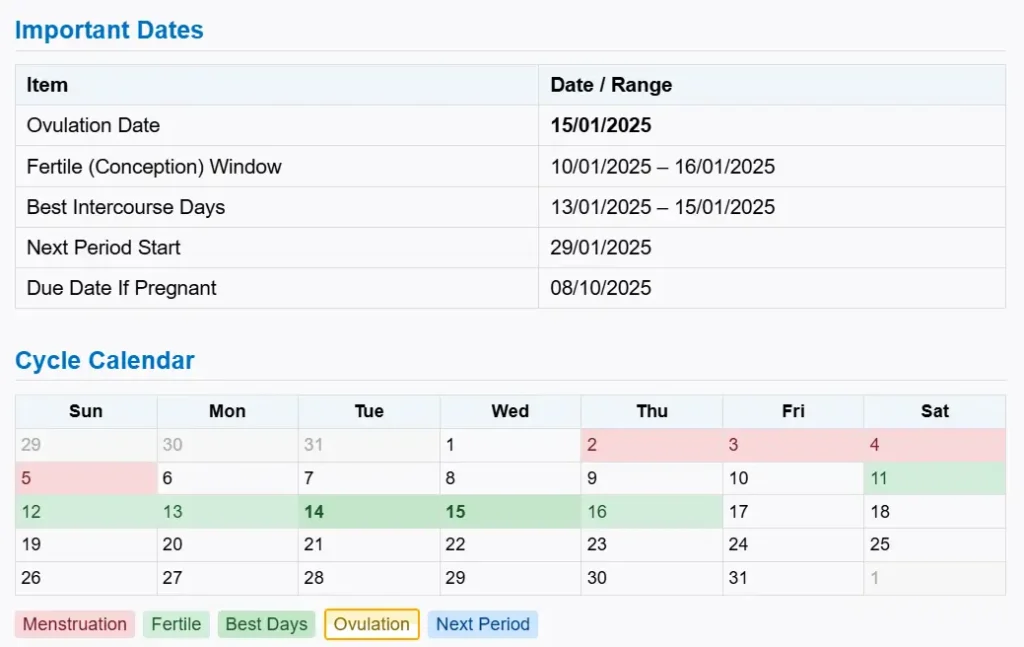
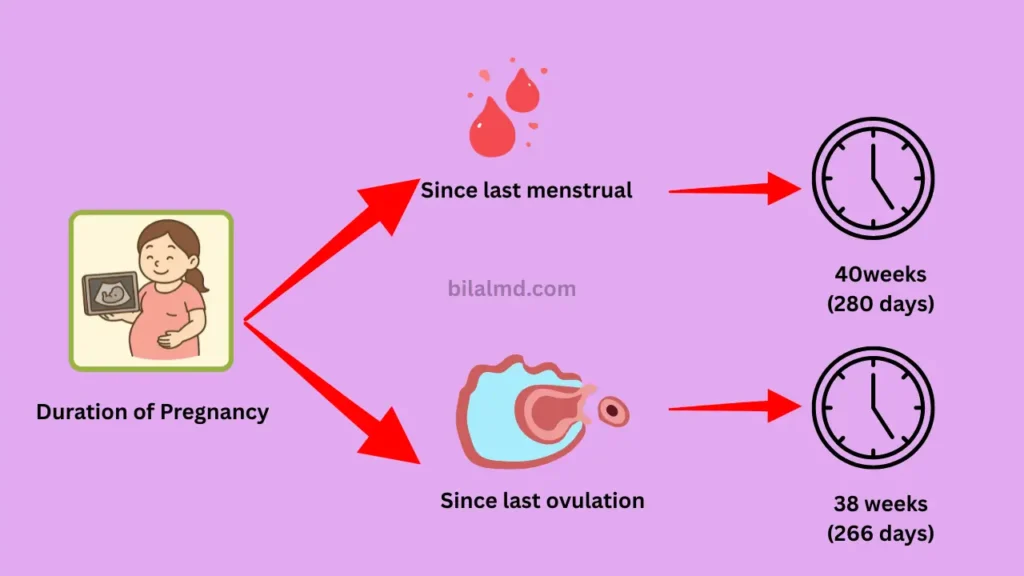
In pregnancy, the due date (also called the Estimated Due Date, EDD) is the approximate date when labor is expected to begin. Traditionally, due dates are calculated from the first day of your last menstrual period (LMP) by adding 280 days (40 weeks). This method assumes a typical 28-day cycle with ovulation about 14 days after the LMP. However, not everyone has a textbook cycle, and many women want a more tailored estimate. That’s where calculating the due date by conception comes in. If you know the date of conception (when the egg was fertilized), you can add 266 days (about 38 weeks) to that date to estimate your due date. In other words, pregnancy lasts roughly 38 weeks from conception (which corresponds to 40 weeks from the LMP due to the ~2-week gap before ovulation). Knowing these two methods will help you understand your timeline, whether you track from your last period or from the moment of conception.
How to Calculate Your Due Date from Conception
Calculating your due date based on conception is straightforward if you have that key date. Follow these simple steps:
- Identify Your Conception Date: This could be the day you ovulated or the day you know fertilization occurred. In a typical cycle, conception happens about 11 to 21 days after the first day of your last period. Special cases like fertility treatments (IUI or IVF) often provide an exact conception date.
- Add 266 Days (38 Weeks): From your known conception date, count forward 266 days. This gives your estimated due date. For example, if conception occurred on March 1, adding 266 days lands around November 22 as the due date.
- Use a Due Date Calculator (Optional): To save time and avoid miscounting, you can use a pregnancy due date calculator and select the conception date option. By inputting the conception date, the calculator will automatically add the appropriate number of days and give you the result. This is a handy way to double-check your math and track your pregnancy timeline.
This conception-based calculation assumes a typical gestation length. It’s important to remember that this due date is still an estimate – but if you’re confident about the day you conceived, it can be more specific to you than the LMP method.
Conception Date vs. Last Menstrual Period Method
You might be wondering how due date by conception differs from the standard LMP-based due date. The key difference is in the starting point of the count:
- LMP Method: Start from the first day of your last menstrual period and add 280 days (40 weeks). This is the most common method and is used by doctors and pregnancy wheels.
- Conception Method: Start from the date of conception (or ovulation) and add 266 days (38 weeks). This essentially skips the roughly two weeks before ovulation that the LMP method includes.
Both methods typically arrive at due dates about 40 weeks from your last period, but using the conception date can be more accurate for women who do not have “average” cycles or ovulation timing. For example, if you ovulate later than day 14 of your cycle, the LMP method might overestimate your gestational age. Conception-based dating adjusts for your personal cycle by zeroing in on when fertilization likely happened. In summary, if you know exactly when you conceived, the conception method gives a tailored due date, whereas the LMP method is a convenient general rule when conception isn’t known precisely.
When Do You Know Your Conception Date?
Many pregnant women are unsure of their exact conception date, and that’s completely normal. Ovulation (and therefore conception) isn’t always felt or observed, and sperm can survive for up to 5 days, making it hard to pin down the exact moment of fertilization. Here are scenarios regarding knowing (or not knowing) your conception date:
- Regular Tracking: If you were actively tracking ovulation (using predictor kits, basal body temperature charts, etc.), you may have a good idea of when you ovulated. In this case, you can use that as your conception date for a potentially more accurate due date. Women who track fertility signs often know the day (or narrow window) when conception likely occurred.
- IVF or Fertility Treatments: If you conceived through in vitro fertilization (IVF) or certain infertility treatments, you will know the exact date of conception because the embryo transfer date is scheduled. Doctors calculate the due date precisely in these cases (e.g., adding 263 days after a 3-day embryo transfer, or 261 days for a 5-day transfer). IVF essentially provides a confirmed conception timing, eliminating guesswork.
- Uncertain or Irregular Cycles: If you have irregular periods or didn’t track ovulation, determining the exact conception date can be difficult. Most women in this situation rely on their LMP or an early ultrasound for dating. For instance, if you can’t recall your last period’s start or your cycles vary widely, it’s tricky to estimate ovulation. In such cases, don’t worry – healthcare providers have other ways to date the pregnancy (which we’ll discuss next).
Remember, it’s rare to know conception with pinpoint accuracy unless you had medical assistance or diligent tracking. Even in a “perfect” 28-day cycle, ovulation (and conception) might not happen exactly on day 14. Most women do not know the exact date of conception because it’s challenging to know exactly when ovulation occurs, so you’re not alone if you’re unsure. That’s why doctors often combine methods – using LMP as a starting estimate and then refining the due date with ultrasounds.
Using Ultrasound and Other Methods to Confirm Due Date
No matter which date you start with, your care provider will likely confirm or adjust your due date with an early ultrasound. An ultrasound in the first trimester (around 7–8 weeks) can measure the baby’s size (crown-rump length) to estimate gestational age. In fact, first trimester ultrasounds are considered the most accurate way to date a pregnancy. If the ultrasound estimate doesn’t match the date calculated from your LMP or conception, the doctor may change the due date accordingly. This is common because due dates can change based on ultrasound measurements, especially if you have an irregular cycle or uncertain dates.
Other methods and signs also help refine dates:
- Healthcare Provider Exam: A pelvic exam in early pregnancy can sometimes gauge gestational age based on uterus size.
- Doppler Heartbeat: Detecting the fetal heartbeat via Doppler (usually audible by about 10–12 weeks) can reassure that dating is on track.
- Fundal Height: In later pregnancy, the doctor measures your belly (fundal height) which generally correlates with weeks of gestation, though this is less precise.
The bottom line is that you don’t have to figure it all out alone. Use your known information (LMP or conception date) to get an estimate, and then rely on prenatal appointments to confirm that estimate. Early scans and check-ups will ensure your due date is as accurate as possible, so you can plan for the big day.
How Accurate Is a Due Date by Conception?
It’s important to understand that all due dates are estimates – whether calculated by LMP, conception, or ultrasound. Every pregnancy is unique, and babies don’t always arrive exactly on schedule. Calculating by conception can give you a more personalized estimate, but it still isn’t a guarantee. Here are some facts on due date accuracy:
- Only about 5% of babies are born on their exact due date. In other words, it’s quite rare to deliver exactly on the predicted day.
- The majority of births happen within a window of about two weeks before or after the due date. It’s more realistic to think in terms of a due week or even due month rather than a single day.
- A normal full-term pregnancy can range from 37 weeks to 42 weeks of gestation and still be considered on time. So a baby isn’t “late” or “early” unless they come outside of that range.
- Various factors (like a mother’s health, first pregnancy vs. subsequent, genetics) can influence when labor starts. These factors contribute to why due dates are not exact appointments but rough guides.
What does this mean for you? If you used your conception date to get a due date, treat that day as a helpful target, not a deadline. It’s wise to be prepared a couple of weeks before and not be too alarmed if you go a little past the date. Always keep in touch with your healthcare provider, especially as the due date approaches, so they can monitor you and your baby’s well-being. Remember that whether calculated by conception or other methods, the due date is a best guess – your baby will decide the final timing!
Planning Ahead with Your Conception-Based Due Date
Knowing your estimated due date allows you to plan for your baby’s arrival – you can time your maternity leave, prepare the nursery, and arrange support for the postpartum period. If you’ve calculated your due date by conception and confirmed it with your doctor, you can feel confident in your preparations. Here are a few tips for expectant mothers:
- Mark the Calendar: Note down your due week (not just the exact date). It’s a good idea to have things ready a couple of weeks in advance of the due date, just in case.
- Use a Pregnancy Timeline: Many pregnancy apps or websites (including our own Conception Calculator tool) will provide a week-by-week timeline once you input your due date. This can inform you of key milestones, prenatal test timing, and baby’s development progress.
- Stay Flexible: As emphasized, don’t panic if your due date changes slightly after an ultrasound or if you go past the originally calculated date. It’s common for doctors to adjust the date as more information becomes available. The goal is to ensure you and baby are healthy, not to meet a specific day on the calendar.
- Consult Your Provider: Always discuss your estimated due date with your midwife or OB/GYN. They might use the conception date you provide, combined with ultrasound data, to set the official due date in your medical records. Feel free to ask them how they arrived at the date – understanding the calculation can give you peace of mind.
By focusing on a due date calculated from when you conceived, you’re tailoring the timeline to your body’s schedule. This can reduce some uncertainty, especially if your cycles don’t match the average. Just keep in mind that whether by conception or LMP, the due date is an approximation. Use it as a guide for preparation and excitement, but trust that your baby will come at the right time for them.
FAQs
Conclusion and Next Steps
Calculating your due date by conception is a useful way to get a personalized estimate of your baby’s arrival. It’s particularly helpful for women who know their ovulation date or underwent fertility treatments, and for those with irregular cycles who need an alternative to the LMP method. We’ve learned that you can simply add 38 weeks to your conception date to get an estimated due date, and that early prenatal scans will fine-tune this prediction. Every due date – whether based on your last period or conception – comes with a bit of wiggle room, so it’s wise to prepare for a window rather than an exact day.
Now that you understand how to figure out your due date from conception, you can plan ahead with greater confidence. Be sure to try our online Conception Date Calculator to do the math instantly and see your baby’s expected due date. And as always, continue with regular prenatal check-ups; your healthcare provider will support you in confirming the date and monitoring your pregnancy’s progress. Knowing your due date is exciting, but the real adventure is the journey of pregnancy and the joy of meeting your little one when the day finally comes.