
Finding out when your baby is due is one of the most exciting parts of early pregnancy. While very few babies arrive exactly on their estimated date, knowing your due date helps you track progress and plan ahead. Most due dates are calculated from the first day of your last menstrual period. Fortunately, tools like our Conception Calculator make it easy to estimate yours. Let’s break down how your due date is determined.
How to Calculate Your Due Date
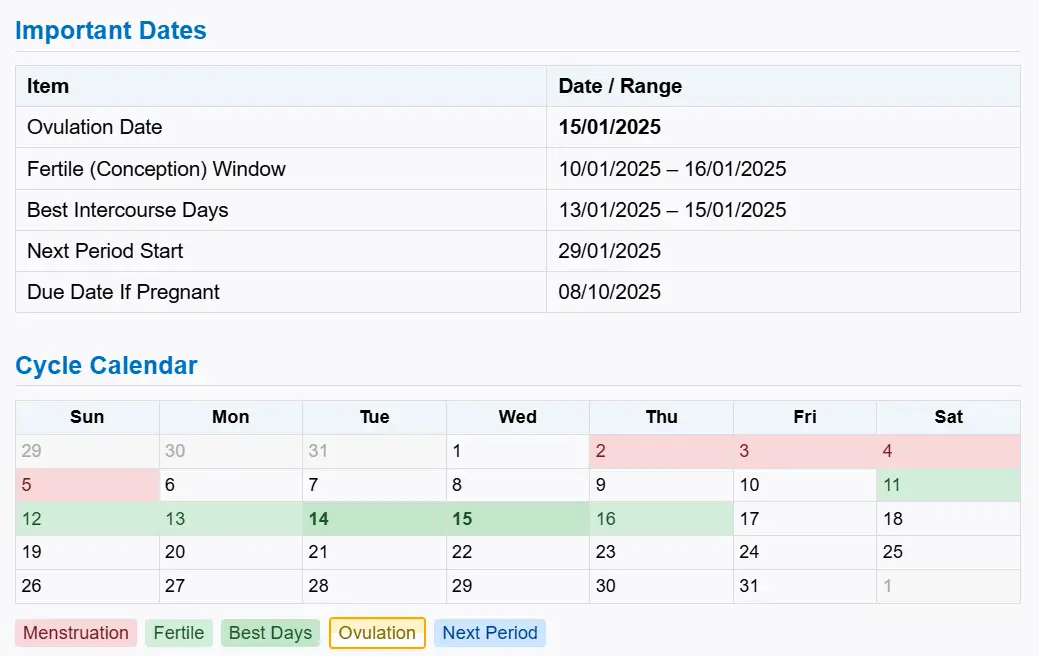
There are several methods to calculate your estimated due date (EDD). These include using your last menstrual period, conception date, IVF transfer date, or an early ultrasound. Each method can give slightly different results depending on your cycle and health history. Medical professionals typically use the LMP method unless more accurate data is available. Our calculator lets you explore all options.
What Is an Estimated Due Date During Pregnancy?
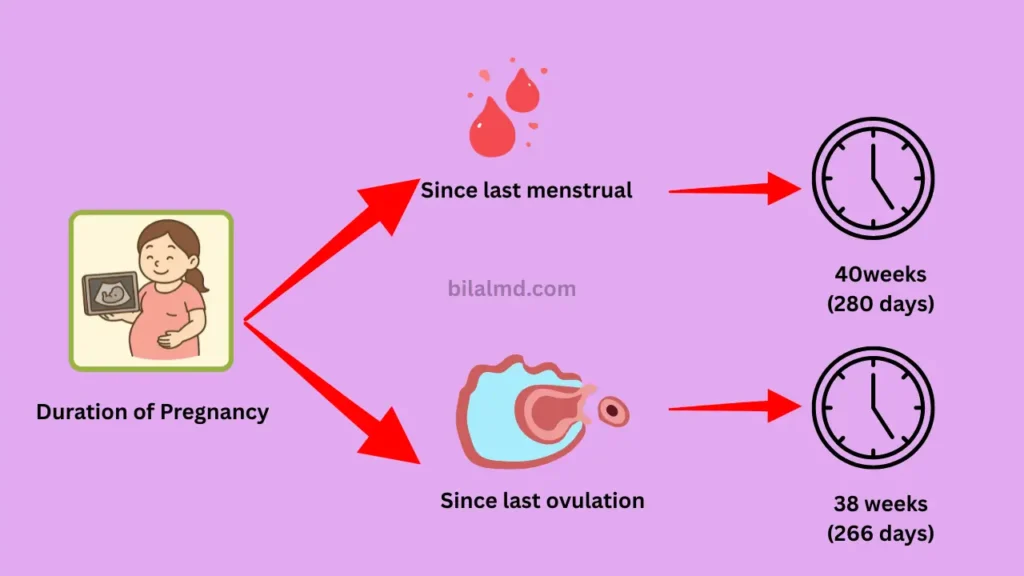
An EDD is the projected date of delivery, based on a standard 40-week pregnancy timeline. However, it is only an estimate. Fewer than 5% of babies are born on their exact due date. Most arrive within a two-week window before or after. The EDD helps guide prenatal care and testing.
First Day of Last Period
The most common method is counting 280 days (40 weeks) from the first day of your last menstrual period (LMP). This method assumes a 28-day cycle and ovulation around day 14. It’s simple but can be less accurate if your cycle is irregular. Healthcare providers use this approach because it’s based on a known date. It’s also the default method in most due date calculators.
Conception Date
If you know when you ovulated or conceived, this can provide a more accurate estimate. Pregnancy typically lasts 266 days from conception. This method is helpful if you’ve been tracking ovulation or using fertility tools. It’s especially useful for people with irregular cycles. Just input your conception date into the calculator to find your EDD.
IVF Transfer Date
IVF offers one of the most precise ways to estimate your due date. That’s because the embryo transfer date is known exactly. For a day 3 embryo transfer, add 263 days; for a day 5 transfer, add 261 days. The calculator automatically adjusts for this. It’s the gold standard for IVF pregnancies.
Ultrasound Scan
An early ultrasound, usually done in the first trimester, can help date a pregnancy. This is especially helpful if you don’t remember your LMP or have irregular cycles. Ultrasound dating is based on fetal size and development. Your doctor may adjust your due date if the ultrasound shows a significant difference. It’s a safe and accurate method.
Can I Plan My Due Date?
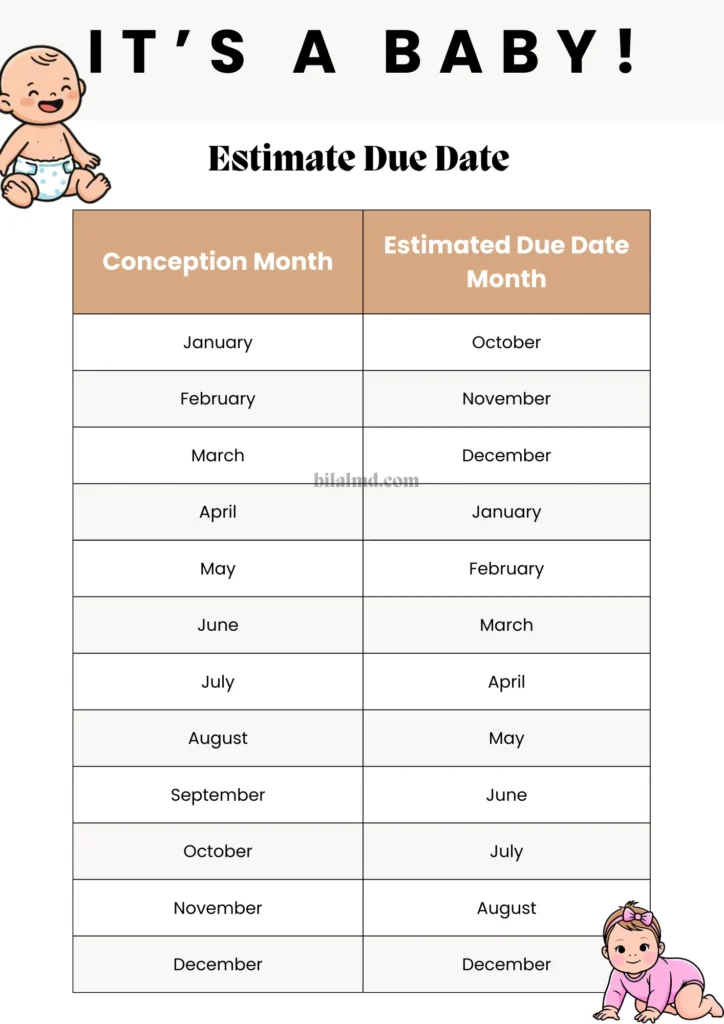
Some people try to conceive during specific months to avoid summer births or align with school breaks. While you can try to time conception, predicting the exact due date is never guaranteed. Fertility tracking tools and ovulation kits can improve timing. However, many variables affect conception and gestation. Flexibility is key.
Can My Due Date Change?
Yes, your due date might change as your pregnancy progresses. This often happens after an ultrasound that shows your baby is smaller or larger than expected. Your healthcare provider may also adjust it if your menstrual cycle is irregular. These changes are normal and ensure accurate monitoring. Always discuss updates with your doctor.
Key Takeaways
- Due dates are estimates, not deadlines.
- Multiple calculation methods exist, each with pros and cons.
- Tools like ultrasound and IVF offer greater precision.
- Most babies arrive within two weeks of their EDD.
- Knowing your due date helps you prepare for pregnancy milestones.
What If I Already Know My Due Date?
If you already know your due date, you can still benefit from the calculator. It helps you see a timeline of milestones, tests, and development stages. You can also explore trimester breakdowns and week-by-week changes. This keeps you informed and empowered. Think of it as a personalized pregnancy roadmap.
How Likely Am I to Give Birth on My Due Date?
Statistically, only about 5% of people give birth on their actual due date. Most deliveries occur between 38 and 42 weeks. Many factors influence when labor begins, including genetics, health, and baby’s position. So while the due date is useful, it’s rarely exact. Expect surprises!
How Soon Can I Take a Pregnancy Test?
Most pregnancy tests are accurate after a missed period. Some sensitive tests can detect pregnancy earlier. Blood tests provide the most reliable early result. If you test too early, you might get a false negative. For best results, wait at least one day after your missed period.
How Accurate Are Due Dates, According to Moms?
Many moms report their babies arrived days or even weeks from their EDD. Experiences vary widely, even within the same family. It’s common to go early with one child and late with another. Community forums and pregnancy apps often share these stories. It’s a reminder that due dates are guidelines, not rules.
How Does the Pregnancy Due Date Calculator Work?
Our tool calculates your due date using LMP, conception, ultrasound, or IVF data. Just input your known date and select the method. The calculator adjusts based on the type of input and average pregnancy length. It gives you a reliable EDD in seconds. It’s simple, fast, and accurate.
How Accurate Is My Pregnancy Due Date?
Accuracy depends on the method used and how early in pregnancy it’s calculated. Ultrasounds before 13 weeks are among the most reliable. LMP-based estimates can be off if cycles are irregular. IVF provides near-exact due dates. Still, every pregnancy is unique, and babies come when they’re ready.
Other Methods for Estimating Gestational Age
Besides LMP and ultrasound, doctors may use pelvic exams or Doppler to assess fetal age. Fundal height measurements also help in later stages. Blood tests like hCG levels can offer clues in early pregnancy. These methods support your EDD but aren’t primary calculators. They help fill in the gaps.
Free Pregnancy Resources Are Available for You
Pregnancy can be overwhelming, but you’re not alone. Use trusted tools like our Conception Calculator to stay on track. Explore free guides, apps, and articles to learn about each stage. Community forums can also offer support. You have everything you need to feel confident.