Many expecting mothers wonder, “When exactly did I conceive?” Pinpointing the exact date of conception can be tricky, since several factors influence when pregnancy begins. However, it’s possible to estimate a likely conception date range by using a few different calculation methods.
What is the Conception Date?
In simple terms, your conception date is the day your egg was fertilized by sperm, beginning a new pregnancy. This typically occurs around the time of ovulation (when an ovary releases an egg). For most women with regular cycles, ovulation happens approximately in the middle of the cycle, about two weeks after the start of the last menstrual period (LMP). Keep in mind this is an estimate – every woman’s cycle can vary.
Medically, conception can be defined to include both fertilization and the implantation of the fertilized egg in the uterus. Under this definition, you aren’t officially “pregnant” until implantation occurs. But for purposes of figuring out dates, people often refer to the day of fertilization (ovulation day) as the conception date.
Also, note that healthcare providers track pregnancy starting from the first day of your last menstrual period, not from conception. This gestational age is about two weeks ahead of the actual fetal age. So if you are “6 weeks pregnant” by your doctor’s estimate, the conception likely happened around 4 weeks ago.
Methods to Estimate Your Conception Date
There are a few ways you can estimate when you conceived. Each method has its own assumptions and level of accuracy.
Using Your Last Menstrual Period (LMP)
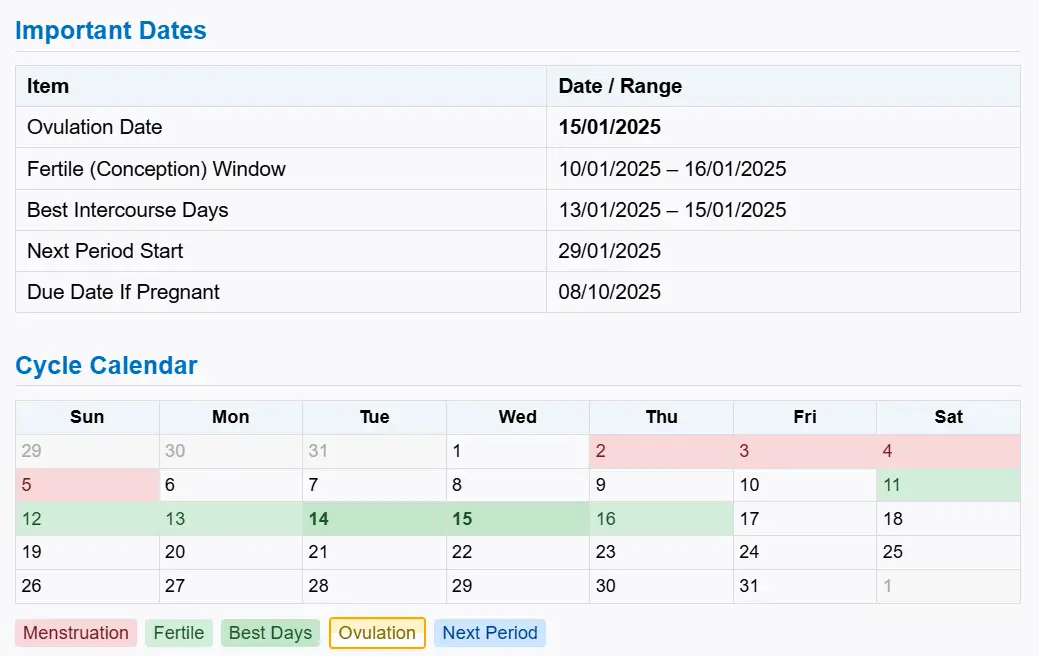
One common way to estimate conception is by using the date of your last menstrual period. If you have fairly regular cycles, you can start with the first day of your last period and add about 11 to 21 days to find the possible window when ovulation and conception occurred. Ovulation usually occurs roughly two weeks after your period begins, and an egg is viable for about 24 hours after ovulation. This means if you find out the first day of your last period, adding ~14 days gives a rough conception date for a typical 28-day cycle. For example, if your last period started on March 1, then an average estimate for ovulation (and conception) might be around March 14-15.
However, this LMP-based method is not exact. Women have different cycle lengths and ovulation timing. Some ovulate earlier or later than the “day 14” average, especially if their cycles are shorter or longer than 28 days. For instance, in a 35-day cycle, ovulation might occur around day 21 (which would make conception later in the cycle), whereas in a 21-day cycle it could occur around day 7. If you’re not sure how long your cycle is or when you ovulate, this method can only provide a broad estimate.
A simple formula sometimes given is:
Conception Date ≈ First day of last period + (Cycle Length – 14 days).
This formula assumes ovulation happens 14 days before your next period is due. For an average 28-day cycle, that comes out to 28 – 14 = 14 days after your last period started. In reality, it’s an approximation, so consider a window of a few days around that calculated date.
If the first day of your last period was March 1 and your average cycle length is 30 days, subtract 14 from the cycle length (30 − 14 = 16).
Add 16 days to March 1, which gives an estimated conception date of March 17.
Tracking Ovulation
If you have been tracking your ovulation, you can get a more precise idea of your date. Methods like basal body temperature charting or ovulation predictor kits can tell you when you ovulate. Conception most likely happened on the day of ovulation or within 24 hours after, since the egg only survives about a day if not fertilized. Sperm, on the other hand, can survive in the reproductive tract for 3–5 days in fertile cervical mucus (and up to a week in some cases). This means intercourse a few days before ovulation could also lead to fertilization when the egg is released.
So, if you know your exact ovulation date (say, from an ovulation test or a fertility app), that date (or the following day) is a good estimate for when conception occurred. For example, if an ovulation test was positive on July 10, indicating ovulation on July 11, then conception likely took place around July 11 or 12 (assuming sperm from intercourse in the days prior were present to fertilize the egg).
Using the Date of Sexual Intercourse
Some people try to figure out conception based on the last time they had sex. This can be useful if you only had intercourse once or very infrequently in the month you got pregnant. However, this method is less reliable if you had sex multiple times that month.
Remember that sperm can live inside a woman’s body for several days waiting for ovulation. If you had intercourse on March 1 and ovulated on March 5, the sperm from March 1 could still fertilize the egg on March 5. That means the date of conception would be March 5 in this case, even though intercourse happened four days earlier.
If you only had sex on one day during your fertile window, then you can assume conception happened within a week of that encounter at most. But if you had sex on many occasions, it’s hard to pinpoint which instance led to conception. Either way, identifying the likely ovulation day (as described above) is more useful than the intercourse date itself in figuring out conception.
Using an Ultrasound or Medical Exam
The most accurate way to determine how far along you are (and thus estimate conception) is through an early ultrasound examination. During an ultrasound in the first trimester, a healthcare provider can measure the size of the embryo/fetus. These measurements are used to estimate gestational age (how many weeks pregnant you are). By knowing how far along the pregnancy is, a doctor can work backward to an approximate conception date.
Early ultrasounds (around 5–8 weeks after LMP) are generally very precise for dating a pregnancy. For example, if an ultrasound shows a fetus that measures at 8 weeks of development, the doctor might conclude you became pregnant about 8 weeks earlier. (Remember, that’s 8 weeks from conception, which would be about 10 weeks from the last period in this scenario.) This method is especially helpful if you have irregular periods or don’t know your last menstrual period date.
Using Your Due Date (Reverse Calculation)
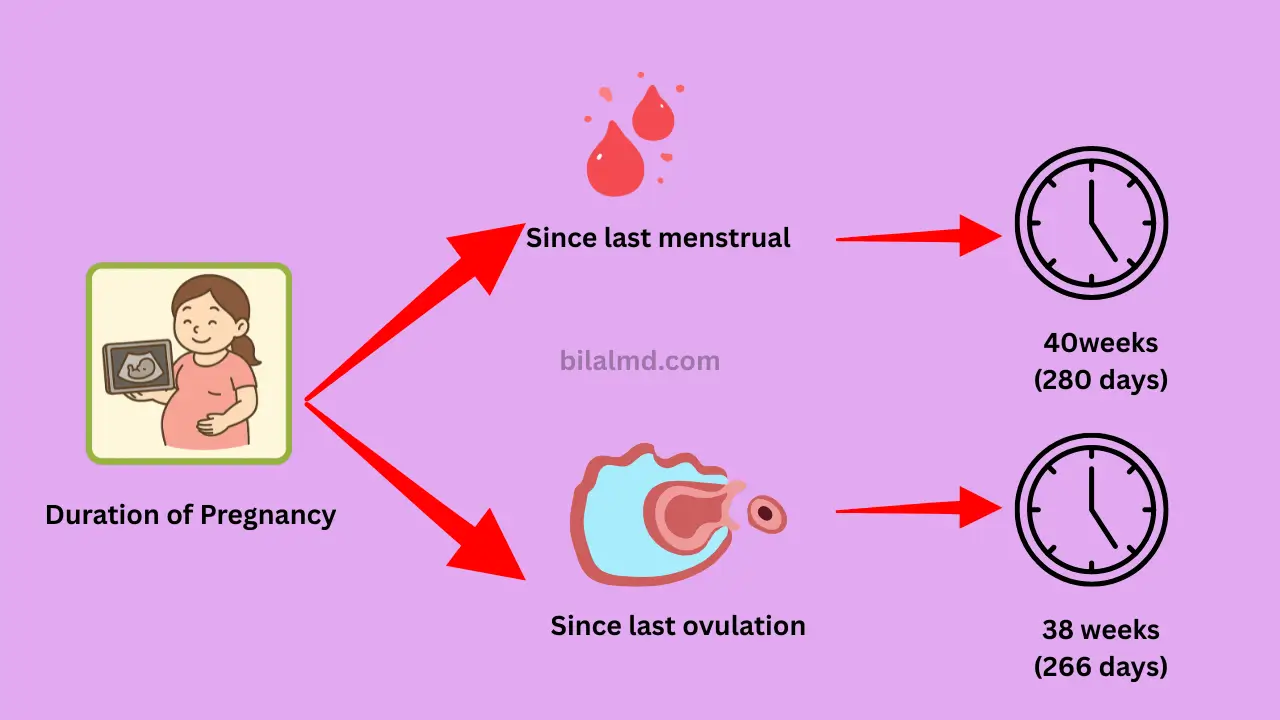
If you already know your estimated due date, you can reverse calculate to find a rough conception date. Pregnancy is typically about 38 weeks long from conception (which is 40 weeks from LMP). In other words, on average it takes about 266 days from the day of conception to the day of delivery.
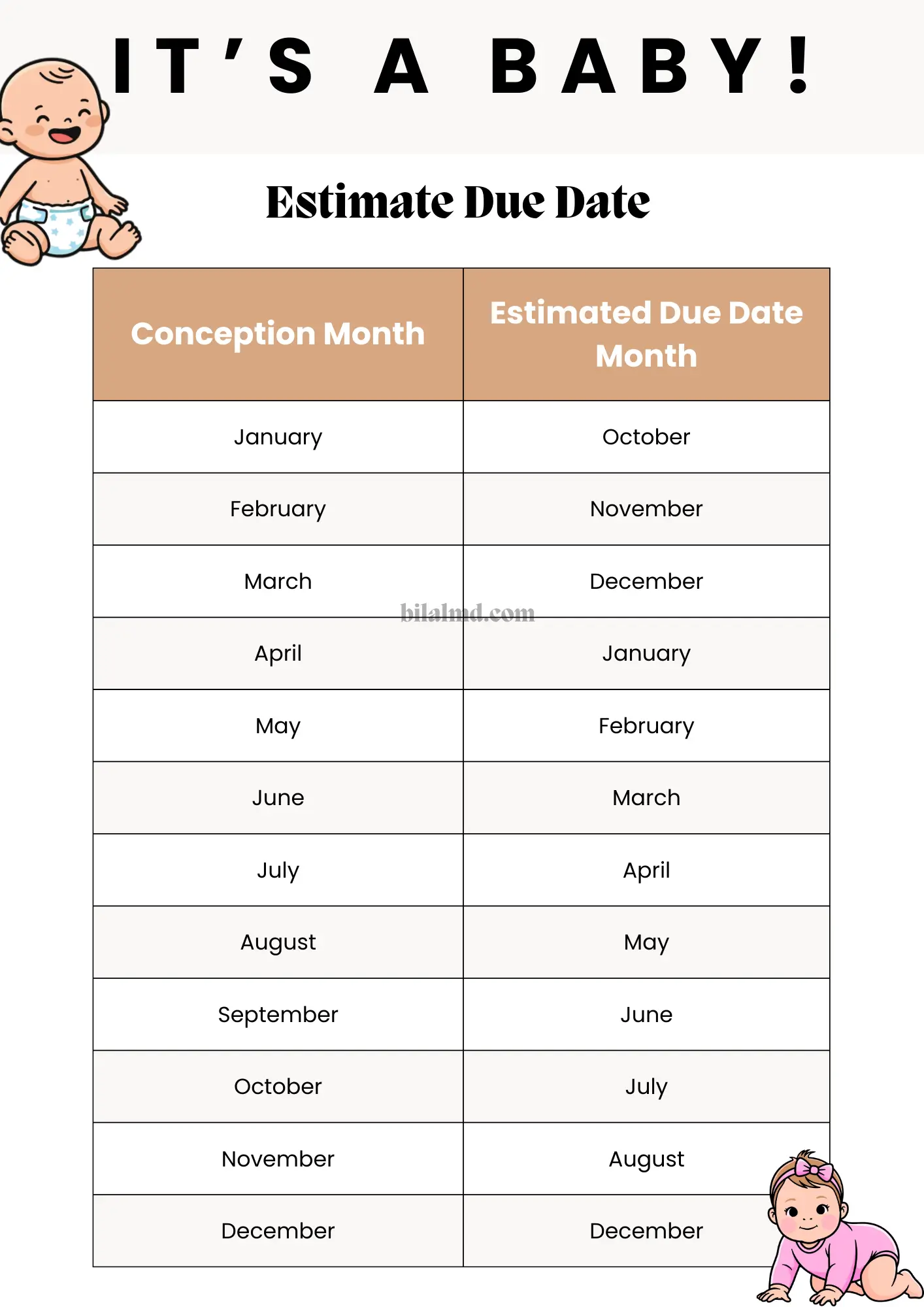
So, one way to get the conception date is to take your due date and count backward by 266 days (or 38 weeks). Many online conception calculators use this method. For example, a due date of January 20, 2024 would suggest a conception around late April 2023.
Keep in mind this is still an estimate. Only a small percentage of babies are born exactly on their due date (around 4-5% according to statistics). Most babies arrive within a week or two before or after that date. So if you use the due date to calculate conception, consider a window of a few days around the date you get.
IVF and Other Assisted Conception
Women who conceive through fertility procedures (such as IVF or artificial insemination) typically know the exact date of conception, because the embryo transfer or insemination date is scheduled by the clinic. In these cases, there is little guesswork – doctors will calculate the due date directly from that known conception date (adding about 266 days).
How Accurate Are Conception Date Estimates?
Estimating the day you conceived is never 100% exact. Even with the best methods, there’s always a margin of error. If you have a very regular 28-day cycle and know when you ovulated, you can get a pretty good idea within a day or two. But if your cycles vary, or you didn’t track ovulation, any date you come up with is a rough guess.
Online calculators and due date calculators provide a convenient estimate, but they rely on the accuracy of the information you enter and the assumption of average timing. They should be used as helpful tools, not absolute answers. The same goes for using your LMP or a single day of intercourse – it’s an educated guess.
The most definitive way to date a pregnancy is through an early ultrasound and consultation with a healthcare provider. If you need a confirmed timeline for medical reasons or personal decisions, always consult a professional.
Remember that conception likely occurred during a range of days, especially because sperm can survive for several days. So instead of pinpointing a single day, it may be more realistic to think in terms of a conception window (for example, “sometime between June 10 and June 15”).
Using a Conception Date Calculator Tool
Manually calculating dates can be tedious, but fortunately there are online tools that can do the work for you. A pregnancy conception calculator lets you plug in one or more key pieces of information (like your last period date or your due date) and then it computes an estimated date for you. Some calculators also provide additional details, such as the current fetal age or how many weeks along you are.
For instance, if you enter your due date into a conception calculator, it will subtract 266 days and tell you when you likely conceived. If you enter your LMP and cycle length, it will add the appropriate number of days to estimate ovulation and conception. These tools can be handy for satisfying your curiosity or planning purposes.
However, it’s important to remember that even the best calculator is based on general averages. It can give you a good guess, but not a guarantee. Always use the results as approximate. If you need a confirmed timeline for medical reasons or personal decisions, consult a healthcare professional.
Conclusion:
Figuring out your conception date can be done by using your last menstrual period, tracking ovulation, considering the timing of intercourse, or working backward from your due date. Each method can give you a slightly different estimate, but when you put them together you’ll have a better picture of when your pregnancy likely began.
Ultimately, treat any calculated conception date as an estimation. Pregnancy doesn’t run like clockwork, and nature often has its own timing. If knowing the date is important for you, discuss it with your doctor – they can use early ultrasounds and their expertise to help narrow it down. Otherwise, enjoy the journey knowing roughly when it all started, and look forward to the exciting milestones ahead!
Try our calculator.