Similar Posts
Reproductive Cancer Made Simple
1. Prostate Cancer Here are other materials for NLE NRE step 1 2. Testicular Cancer 3. Germ Cell Tumors Tumor Type Tumor Marker Yolk Sac Tumor AFP (Alpha-fetoprotein) Choriocarcinoma Beta-HCG Teratoma AFP or Beta-HCG Seminoma Negative for AFP and Beta-HCG 4. Non-Germ Cell Tumors Tumor Tumor Marker Leydig Cell Cancer Increased Testosterone Sertoli Cell Cancer…
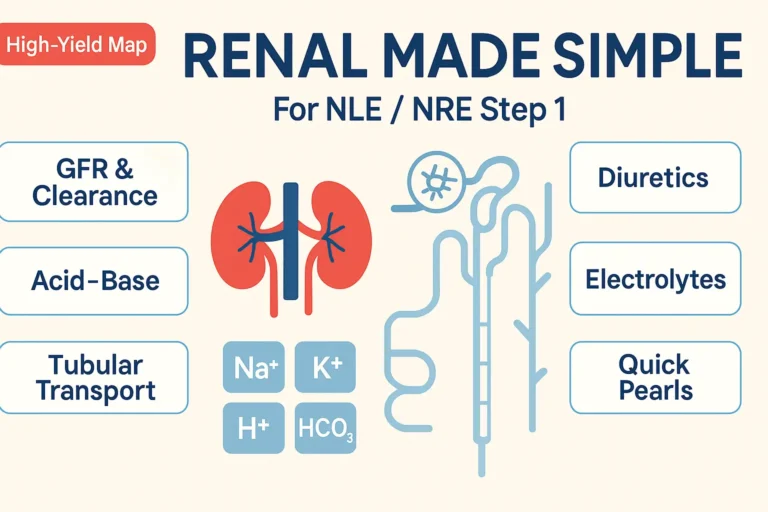
Renal Made Simple
1. Nephrotic vs Nephritic Syndrome Nephrotic Syndrome Causes: Nephritic Syndrome (Inflammatory): Post-infectious: 2. Vasculitis ANCA-associated: Anti-GBM: Hereditary nephritis: 3. Acid–Base Balance & ABGs 4. Polycystic Kidney Disease (PKD) Feature ARPKD ADPKD Onset Childhood Adult Frequency Rare Common Prognosis Poor Good Association Liver cysts Berry aneurysm (↑ SAH risk) USG Enlarged kidneys w/ cysts Multiple cysts…
Pharmacology Made Simple
Pharmacology: Three Types 1. CVS Pharmacology – Anti-Hypertensive (Anti-HTN) 2. Gestational Hypertension (HTN) + Agents Acting on Beta and Alpha Receptors 3. Lipid-Lowering Agents 4. Antiarrhythmic Medications 5. Thyroid Drugs 6. Diabetes Mellitus (DM) 7. GIT Acid Suppression Therapy 8. Antiemetic Medications Here are other materials for NLE NRE step 1 9. Laxatives 10. Antidiarrheal…
Neurology Made Simple
Neurology can be hard, but I made it super easy for you! Just read this blog 2 or 3 times, and you’ll understand it. I made everything as simple as possible you’re going to love it! 1. Huntington’s Disease (HD) 1. What is it? A brain disorder that causes strange body movements, like dancing movements….
Instruments Made Simple
In the Instruments section of the NRE Step 2 examination, examiners commonly ask about the name of the instrument, its uses, and its contraindications. The following are some of the most frequently shown instruments that you should be familiar with during the examination. 1. Foley catheter Indications: Contraindications: 2. Proctoscope PARTS: Indications: Disadvantage: Contraindications: Sterilization:…
Pediatrics Made Simple
1. Fetal Circulation (before birth) 2. Important Shunts (and Adult Remnants) congenital heart diseases Feature Acyanotic CHD (“Pink babies”) Cyanotic CHD (“Blue babies”) Shunt Left → Right Right → Left Oxygen level Normal (no cyanosis) Low (cyanosis present) Most common VSD (overall most common CHD) TOF in adults, TGA in children Examples VSD, ASD, PDA…