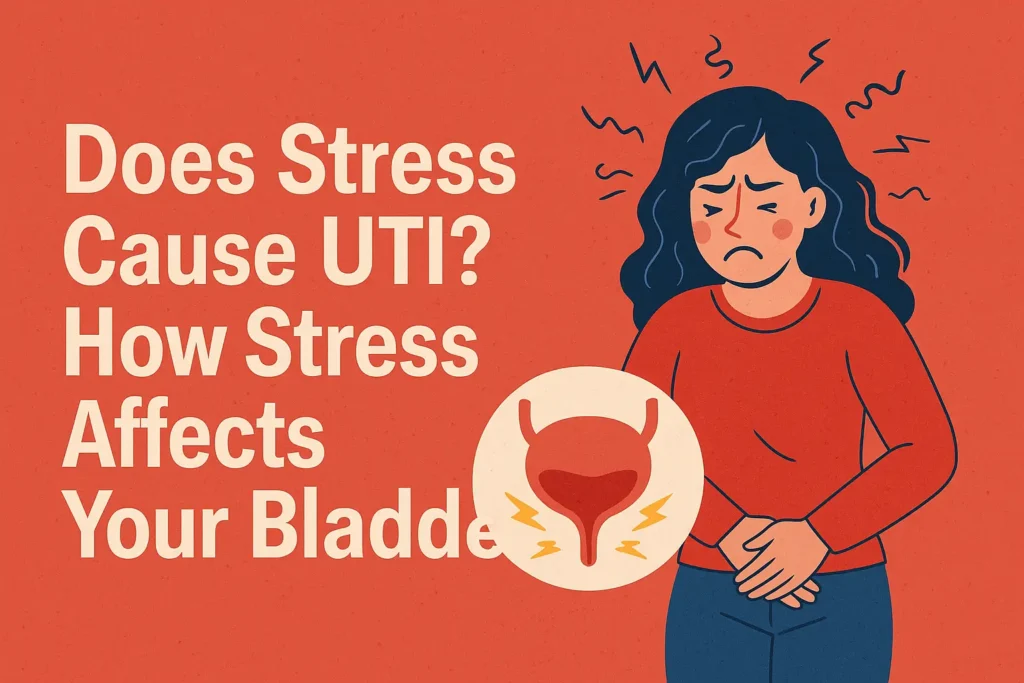
The short answer to does stress cause UTI is no, stress by itself does not create a urinary tract infection. UTIs are caused by bacteria entering and multiplying in the urinary tract. However, strong or ongoing stress can weaken the immune system, change urination habits, and flare bladder conditions that mimic UTIs. All of this can make infections more likely and symptoms more intense.
In other words, stress does not place bacteria into the bladder, but it can create the ideal environment for them to grow.
What actually causes a UTI
A urinary tract infection happens when bacteria, most often Escherichia coli from the bowel, travel up the urethra and into the bladder or higher parts of the tract. The urinary system usually flushes these germs out with regular urination, but if defenses fail, bacteria can multiply and cause an infection.
Typical symptoms include
- Burning or pain while urinating
- A frequent or urgent need to pass urine
- Passing small amounts of urine often
- Pelvic or lower belly discomfort
So bacteria are the direct cause. Stress is not a germ, but it influences how well your body fights those germs.
How stress can increase UTI risk

Impact on immune defenses
Stress triggers the release of cortisol and other stress hormones. When stress becomes chronic, these hormones can dampen normal immune responses and make it harder for your body to clear infections.
Several medical sources explain that stress does not directly cause UTIs, but ongoing stress makes people more susceptible to infections in general, including UTIs, because immune defenses are weaker.
Changes in everyday habits
Stress can also change your behavior in ways that increase UTI risk
- Drinking less water because you are busy or anxious
- Holding urine for long periods during work, travel or worry
- Sleeping poorly, which further weakens immunity
These habits make it easier for bacteria to stay in the bladder and multiply.
Bladder conditions that flare with stress
Stress is a well known trigger for painful bladder conditions such as interstitial cystitis and bladder pain syndrome. In these conditions there is no active infection, but symptoms can look very similar to a UTI and often flare during stressful times.
This is why some people feel clear UTI type symptoms even when their urine tests are negative.

Does stress cause UTIs and UTI symptoms
Many readers search phrases such as does stress cause utis, does stress cause a uti or does stress causes uti. The medical consensus is
- Stress alone does not directly cause UTIs
- Chronic stress can increase the chance of getting an infection
- Stress can also worsen pain, urgency and frequency, so existing UTIs feel more severe and may become recurrent
So the more accurate wording is that stress is a risk factor and a symptom amplifier, not a direct cause.
When people ask does stress cause UTI symptoms, the answer is partly yes. Stress can cause lower urinary tract symptoms such as frequent urination or urgency, even without infection, through effects on bladder nerves and muscle tension.
Does stress cause UTI in women

Biologically, people with vaginas are more likely to get UTIs because their urethra is shorter and closer to the anus, which makes it easier for bacteria to travel to the bladder.
For that reason, questions like does stress cause uti in women or does stress cause uti in woman are common. Research suggests
- Women already have higher baseline risk of UTIs
- Chronic stress may further weaken immunity and create a vicious cycle of recurrent infections and worry, especially in women with repeated UTIs
So again, stress does not directly cause the infection, but in women it can tip the balance toward more frequent or stubborn UTIs.
How to lower stress related UTI risk
Even though stress is not a direct cause, managing it can still protect your urinary health. Helpful steps include
- Drinking enough water throughout the day
- Urinating when you feel the urge rather than holding it
- Using relaxation methods such as deep breathing, gentle exercise or mindfulness
- Prioritising sleep and regular meals
- Talking with a health professional or therapist if stress or anxiety feels overwhelming
For women or men with recurrent UTIs, it is important to follow medical prevention strategies as well, such as targeted antibiotics when appropriate or other measures recommended by a urologist or primary doctor.
When to see a doctor
You should seek medical care if you notice

- Burning or pain with urination
- A strong need to urinate often
- Fever, back pain or nausea
- Blood in the urine
These symptoms can signal a UTI or another urinary problem that needs treatment.
If tests show no infection but you still have bladder pain or frequent urination, ask about interstitial cystitis or other causes that often flare with stress.
Summary
- The direct cause of UTIs is bacteria entering and growing in the urinary tract.
- Stress does not directly place those bacteria in the bladder, so the literal answer to does stress cause uti is no.
- Ongoing stress can weaken immune defenses, alter bladder habits, and flare pain conditions that mimic infection, which means UTIs may appear more often and feel worse when stress is high.
- Managing both medical risk factors and daily stress is a smart way to protect urinary health.