Reproductive Cancer Made Simple

1. Prostate Cancer

  • Location:
    • The prostate gland is located around the urethra and in front of the rectum.
  • Most Common Area Affected:
    • The peripheral zone of the prostate is the most common site for prostate cancer.
  • Risk:
    • Prostate cancer is the second leading cause of cancer-related mortality in males.
  • Benign Prostatic Hyperplasia (BPH):
    • Occurs in the transitional zone of the prostate.
    • Treatment: Alpha-1 antagonists like Tamsulosin are used to treat BPH.
  • Symptoms:
    • Lower back pain.
    • Weight loss.
  • Lab Tests:
    • PSA (Prostate-Specific Antigen) > 4 ng/mL indicates a possible prostate cancer.
  • Diagnostic Test:
    • USG-guided biopsy is the most accurate method for confirming prostate cancer.
  • Grading:
    • The Gleason Grading System is used to assess the prognosis of prostate cancer.
  • Imaging for Metastasis:
    • CT scan is used to assess for metastasis.
  • Treatment:
    • Chemotherapy or TURP (Transurethral Resection of the Prostate) can be performed for treatment.

Here are other materials for NLE NRE step 1

2. Testicular Cancer

  • Germ Cell Tumors:
    • 95% of testicular cancers are germ cell tumors.
    • Risk Factors:
      • Cryptorchidism (undescended testis).
      • Klinefelter syndrome (47, XXY).
  • Non-Germ Cell Tumors:
    • 5% of testicular cancers are non-germ cell tumors.
    • These include Leydig cell tumors and Sertoli cell tumors.

3. Germ Cell Tumors

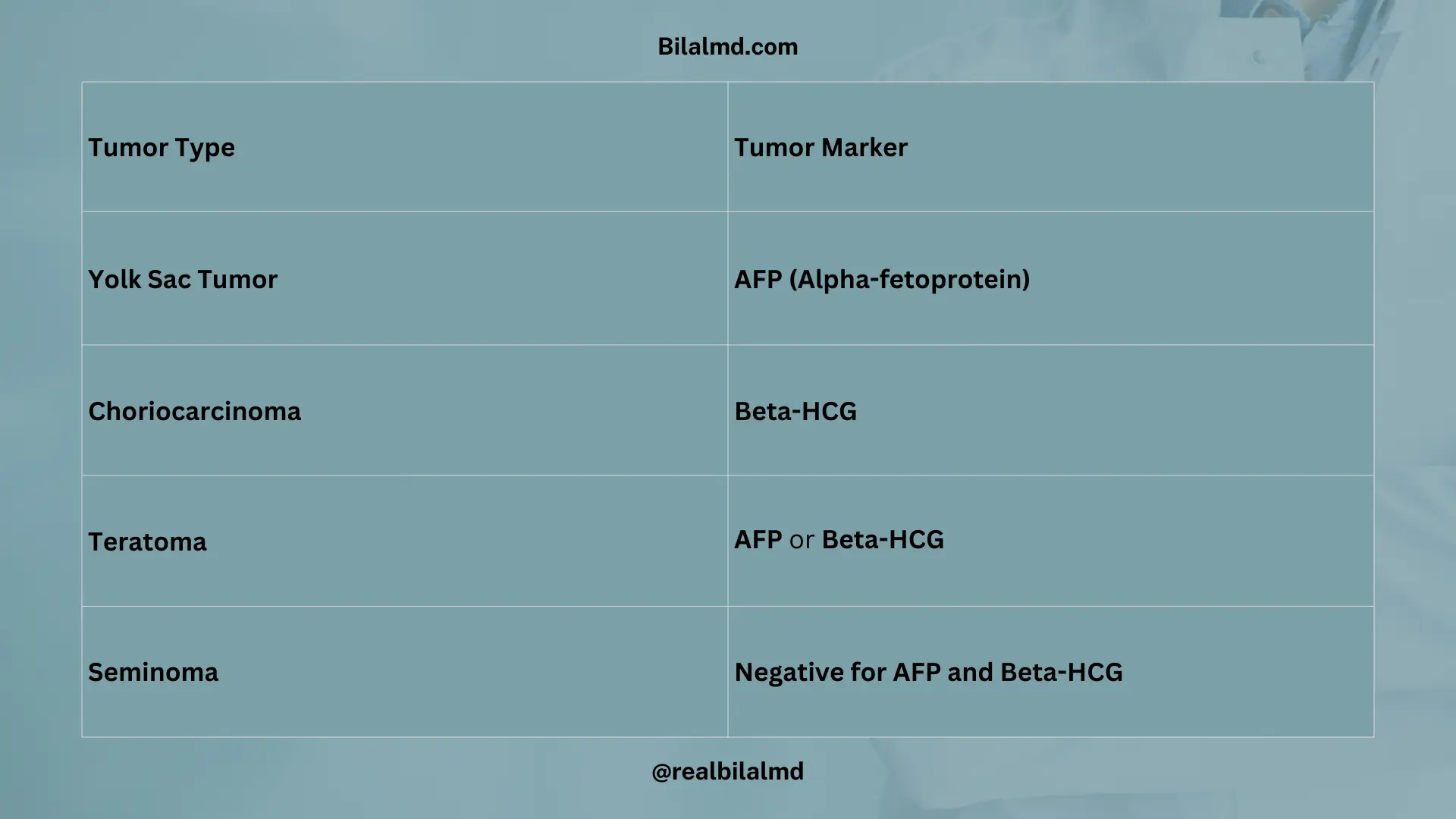
Tumor TypeTumor Marker
Yolk Sac TumorAFP (Alpha-fetoprotein)
ChoriocarcinomaBeta-HCG
TeratomaAFP or Beta-HCG
SeminomaNegative for AFP and Beta-HCG
Germ cell tumor types with their respective tumor markers

4. Non-Germ Cell Tumors

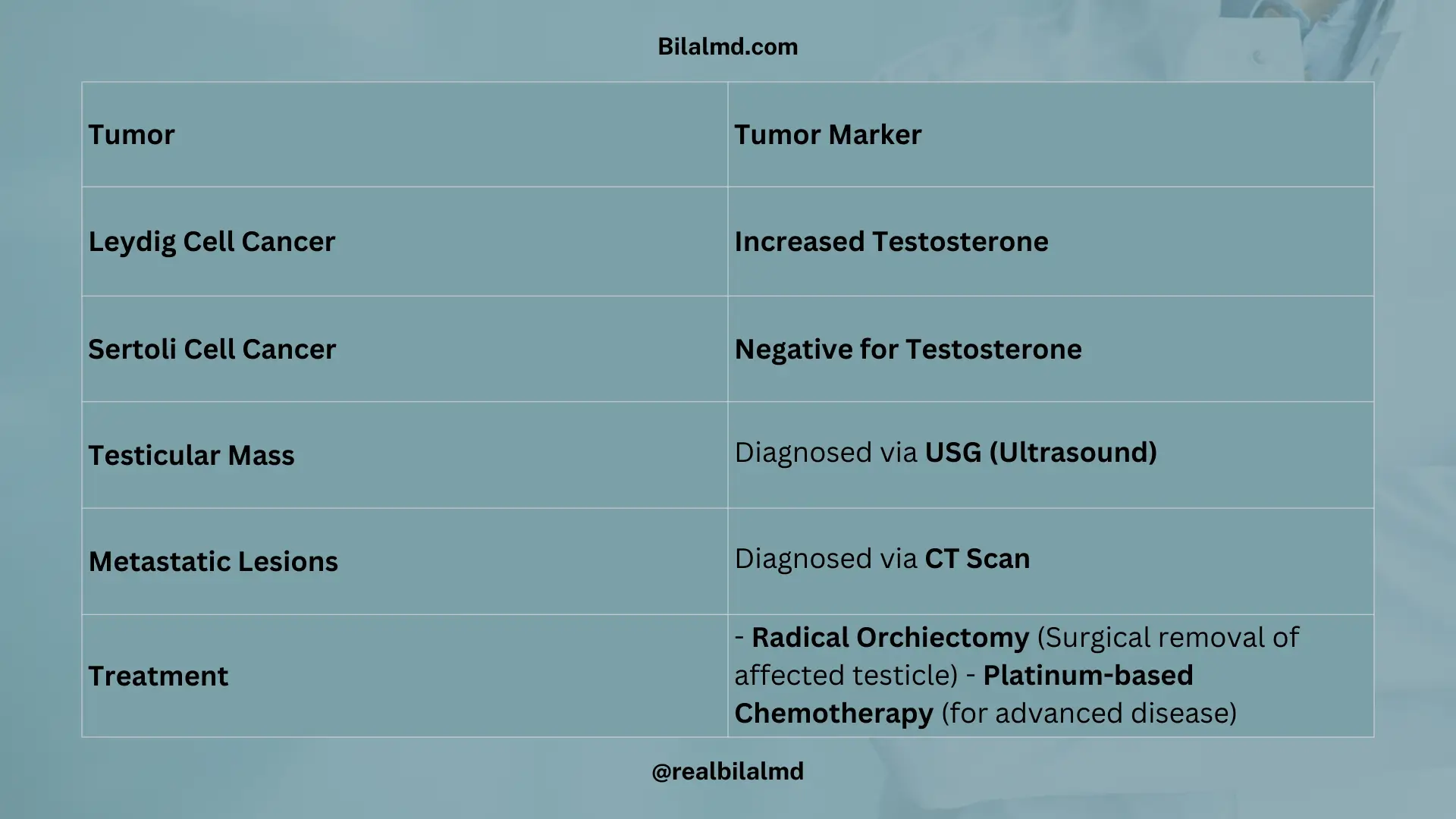
TumorTumor Marker
Leydig Cell CancerIncreased Testosterone
Sertoli Cell CancerNegative for Testosterone
Testicular MassDiagnosed via USG (Ultrasound)
Metastatic LesionsDiagnosed via CT Scan
TreatmentRadical Orchiectomy (Surgical removal of affected testicle) – Platinum-based Chemotherapy (for advanced disease)
Comparison of Leydig cell tumor and Sertoli cell tumor showing testosterone levels, ultrasound diagnosis of testicular mass, CT scan for metastasis, and treatment with radical orchiectomy and platinum-based chemotherapy

Check your NRE Step 1 result after completing the exam.

Similar Posts

  • GIT Surgery Made Simple

    1. Esophagus: Disorders and Management Esophagus Anatomy: Length: 25 cm long, a muscular tube. 1. Infections and Esophagitis: 2. Achalasia and Esophageal Spasm: Symptoms: Diagnosis: Treatment for Achalasia: 3. Barrett’s Esophagus Intestinal Metaplasia: Cancer Types: 4. Plummer-Vinson Syndrome Bisphosphonates 2. Stomach Cell Types: Types of Ulcers: 2. H. Pylori Treatment Diagnosis of H. Pylori Infection:…

  • Pharmacology Made Simple

    Pharmacology: Three Types 1. CVS Pharmacology – Anti-Hypertensive (Anti-HTN) 2. Gestational Hypertension (HTN) + Agents Acting on Beta and Alpha Receptors 3. Lipid-Lowering Agents 4. Antiarrhythmic Medications 5. Thyroid Drugs 6. Diabetes Mellitus (DM) 7. GIT Acid Suppression Therapy 8. Antiemetic Medications Here are other materials for NLE NRE step 1 9. Laxatives 10. Antidiarrheal…

  • GIT Made Simple

    Digestive System (GIT) – Medicine Esophagus: Length: 25 cm long. Strongest Layer: Submucosa. Immunocompromised + Dysphagia + Endoscopy: White patches on endoscopy indicate fungal infection, likely fungal esophagitis. Symptoms: Barium Imaging: Diagnosis: Esophageal Cancer: Barrett’s Esophagus: Region Arteries Cervical Inferior thyroid artery, subclavian artery Thoracic Descending aorta Abdominal Left gastric artery 2. Stomach Shape: J-shaped…

  • CVS Made Simple

    1. Cardiac Murmur Condition Murmur Type Mitral Stenosis (MS) Mid-diastolic murmur Mitral Regurgitation (MR) Holosystolic murmur Aortic Stenosis (AS) Ejection systolic murmur Aortic Regurgitation (AR) Early diastolic murmur Patent Ductus Arteriosus (PDA) Machinery murmur (continuous) Semilunar Valves (Aortic + Pulmonic) S for Stenosis = Systolic 2. Rheumatic Fever Typical Case: Young female, h/o sore throat…

  • Renal Made Simple

    1. Nephrotic vs Nephritic Syndrome Nephrotic Syndrome Causes: Nephritic Syndrome (Inflammatory): Post-infectious: 2. Vasculitis ANCA-associated: Anti-GBM: Hereditary nephritis: 3. Acid–Base Balance & ABGs 4. Polycystic Kidney Disease (PKD) Feature ARPKD ADPKD Onset Childhood Adult Frequency Rare Common Prognosis Poor Good Association Liver cysts Berry aneurysm (↑ SAH risk) USG Enlarged kidneys w/ cysts Multiple cysts…

  • Surgery Made Simple

    1. Burn Tissue Injury 1. Types 2. Common Infection 3. Fluid Resuscitation Parkland Formula Fluid (ml)=4[Weight (kg)×%BSA(burned)] 🔹 Example:Weight = 70 kg, Burn area = 5% BSA 4×70×5=1400 ml Here are other materials for NLE NRE step 1 2. Shock Mnemonic for shock types → SHOCk 1. Hypovolemic Shock 2. Obstructive Shock 3. Cardiogenic Shock 4. Distributive Shock…

Leave a Reply

Your email address will not be published. Required fields are marked *