Passing the PMDC NRE/NLE exam in Pakistan, now known as the National Residency Examination (NRE), is undoubtedly one of the toughest hurdles for medical graduates. I’ve been through it, and while it took immense time, energy, and a fair share of mistakes, I ultimately succeeded. If I can pass it, you can too! Learn from my experience to make your journey smoother and more efficient.
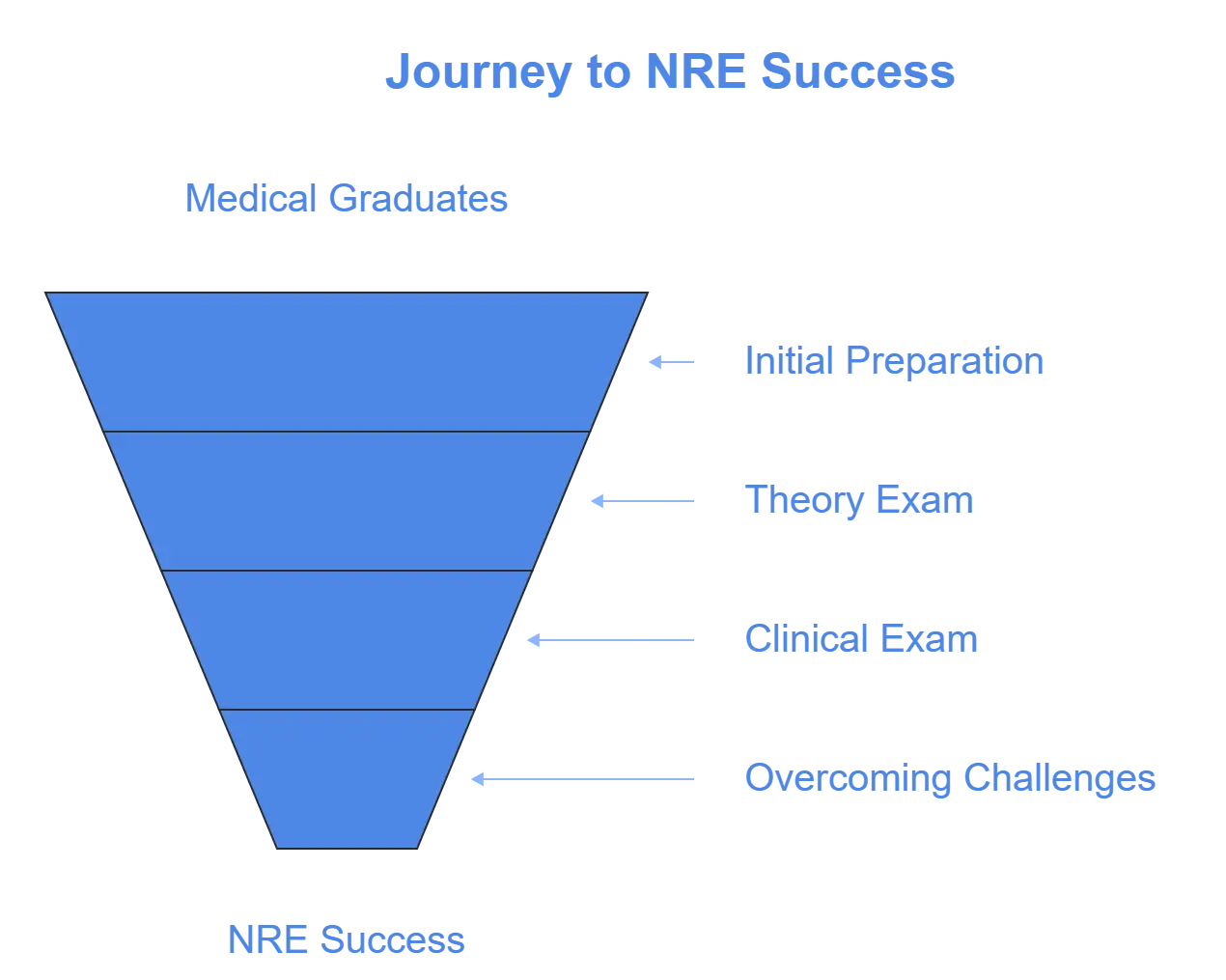
The NRE is a two-step examination conducted twice a year (and you can attempt it as many times as needed):
- Step 1: Theory (MCQ-based)
- Step 2: Clinical
PMDC NRE/NLE Step 1: The Theory Exam
The PMDC NRE Step 1 consists of 200 multiple-choice questions (MCQs) that must be completed within 3 hours. To pass, you need to score 60% (120 MCQs).
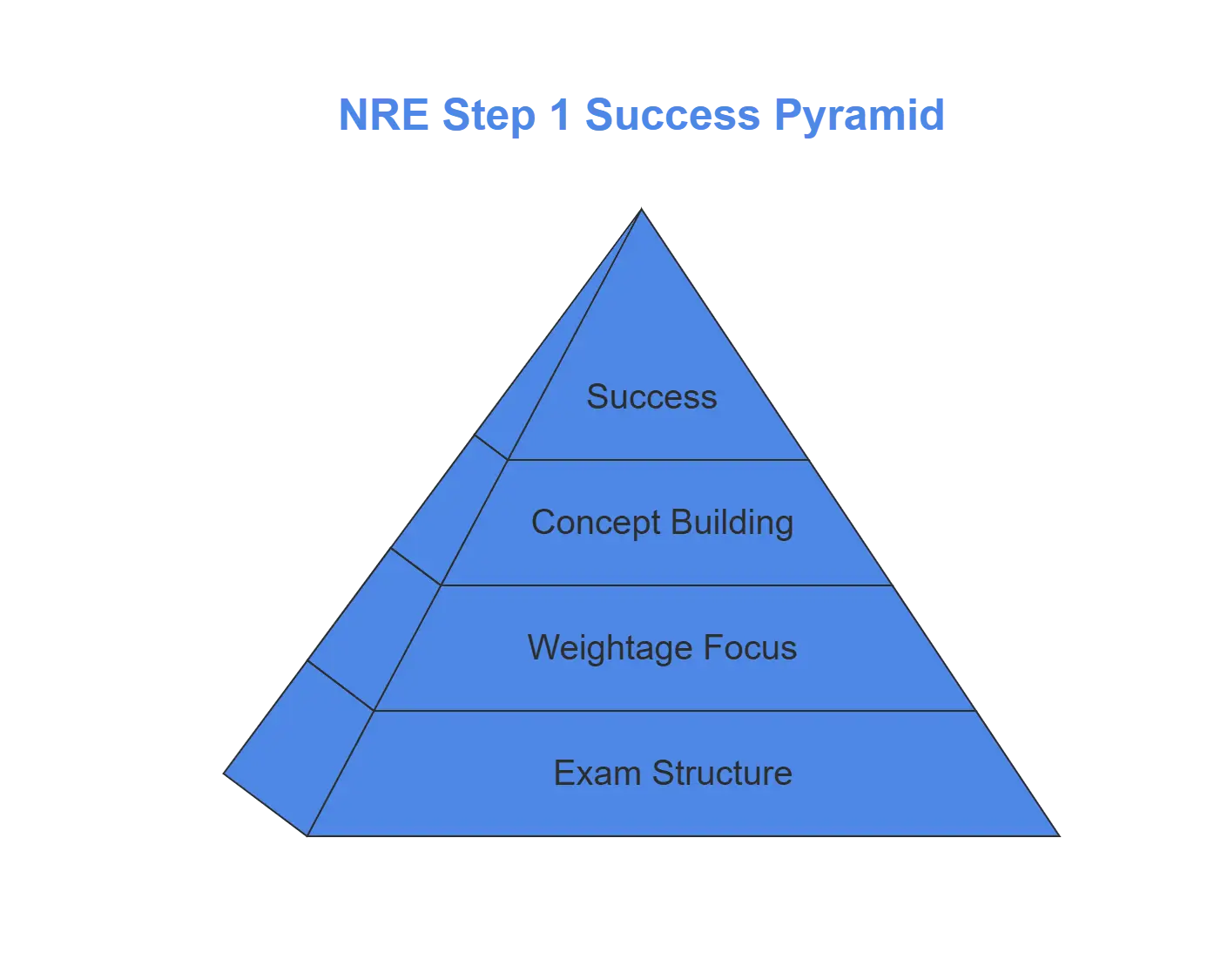
It’s crucial to understand that this exam is concept-based. While past papers can help understand the format and types of questions, don’t expect exact copy-pasted MCQs. Focus on solving multiple-choice questions (MCQs) to build and solidify your concepts.
A significant mistake I made in my initial attempts was not paying attention to the exam weightage criteria. Don’t try to study the entire syllabus with equal intensity. Instead, focus on high-yield topics according to the weightage. I learned this the hard way! My advice is to use resources like First Aid and tailor your study to the specific weightage of each subject.
Here’s the typical breakdown of MCQs and weightage for PMDC NRE/NLE Step 1:
Basic Sciences (30% or 60 MCQs)
| Subject | Number of MCQs | Weightage |
| Applied Pathology | 11 | |
| Applied Anatomy | 11 | |
| Applied Physiology | 10 | |
| Clinical Pharmacology | 8 | |
| Applied Biochemistry | 6 | |
| Community Medicine | 6 | |
| Forensic Medicine & Toxicology | 4 | |
| Total | 60 | 30% |
Clinical Sciences (70% or 140 MCQs)
| Subject | Number of MCQs | Weightage |
| Medicine and Allied | 52 | |
| Surgery and Allied | 48 | |
| Obstetrics & Gynaecology | 14 | |
| Paediatrics | 14 | |
| Ophthalmology (Eye) | 6 | |
| Otorhinolaryngology (ENT) | 6 | |
| Total | 140 | 70% |
In my first attempt, I scored only 97 marks on the MCQs because I overlooked the weightage, spending too much time on low-weightage subjects and neglecting critical areas like Gynaecology and Paediatrics. Don’t make the same mistake!
Overcoming Challenges and My Breakthrough
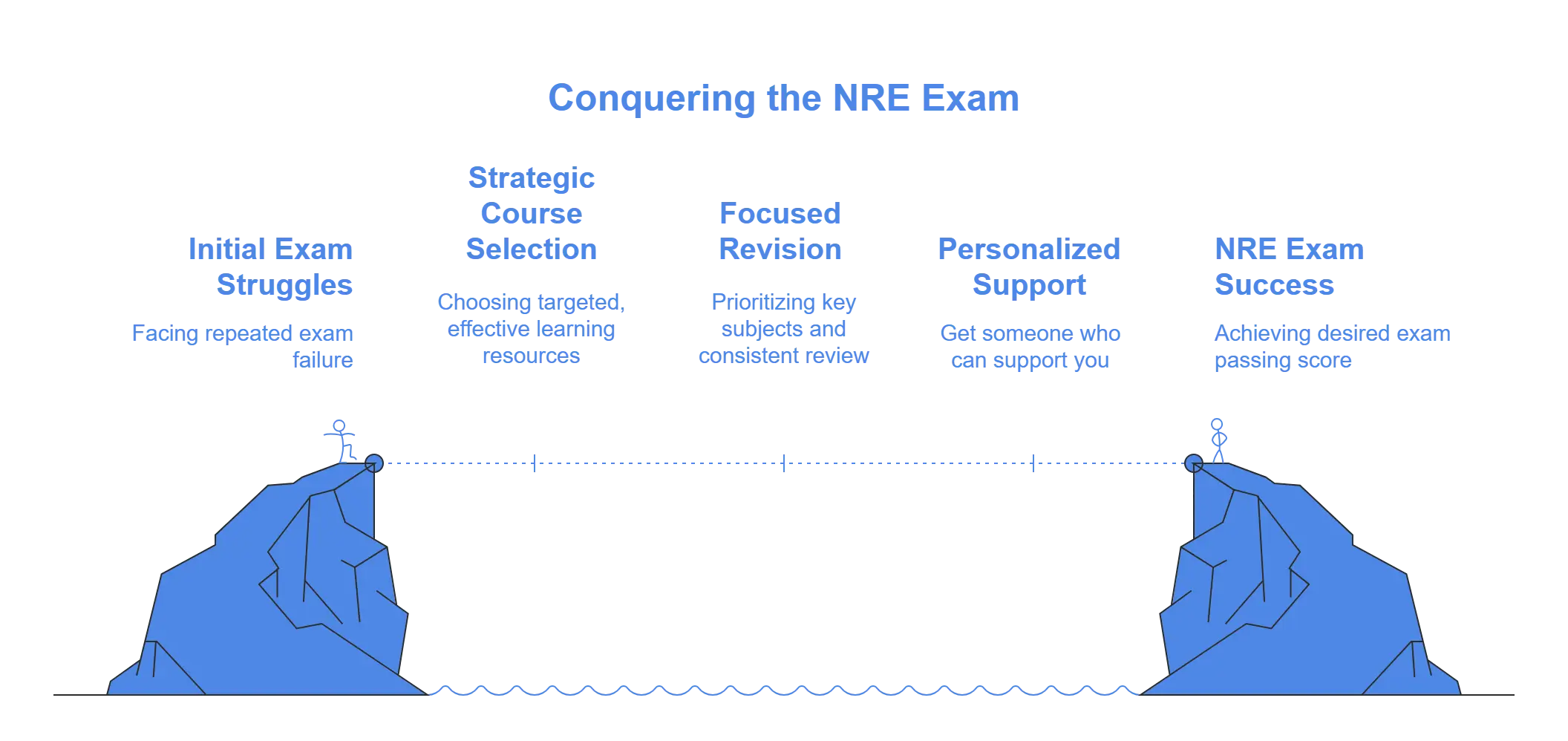
After my first failed attempt, I subscribed to a 6-month online course, confident this would be my turning point. To my dismay, I failed again, and the lack of result percentages made it even more frustrating. It was disheartening to see many of my peers pass while I was left behind, especially as a foreign doctor navigating budget constraints, cooking after long classes, and relying on public transport – challenges most Pakistani students don’t face daily.
This experience fueled my determination for my third attempt. I was preparing for the NRE since 2021, right after COVID, during my 7th semester. For this crucial third attempt, I opted for Dr. Sadiq’s subscription. Their prompt and simple responses on WhatsApp made a huge difference. They broke down concepts in a month that had troubled me throughout my MBBS!
My biggest mistake in the second attempt was overconfidence. I barely revised in the last month and hardly practiced any MCQs. Please, whatever you do, do not skip revision, even if you feel confident. Prioritize learning high-weightage subjects first, then move to the lower-weightage ones.
Key Subjects to Focus On PMDC NRE Exam
Based on my experience, these subjects are particularly important for NRE Step 1. I’ll guide you on how to approach them, much like how I was guided:
| Subject | Number of MCQs |
| Medicine and Allied | 52 |
| Surgery and Allied | 48 |
| Paediatrics | 14 |
| Gynaecology and Obstetrics | 14 |
| Anatomy | 11 |
| Pathology | 11 |
| Physiology | 10 |
| Pharmacology | 8 |
| Ophthalmology | 6 |
| ENT | 6 |
| Biochemistry | 6 |
| Community Medicine | 6 |
| Forensic Medicine | 4 |
Remember, consistency, strategic studying based on weightage, and thorough revision are your keys to success. You’ve got this!
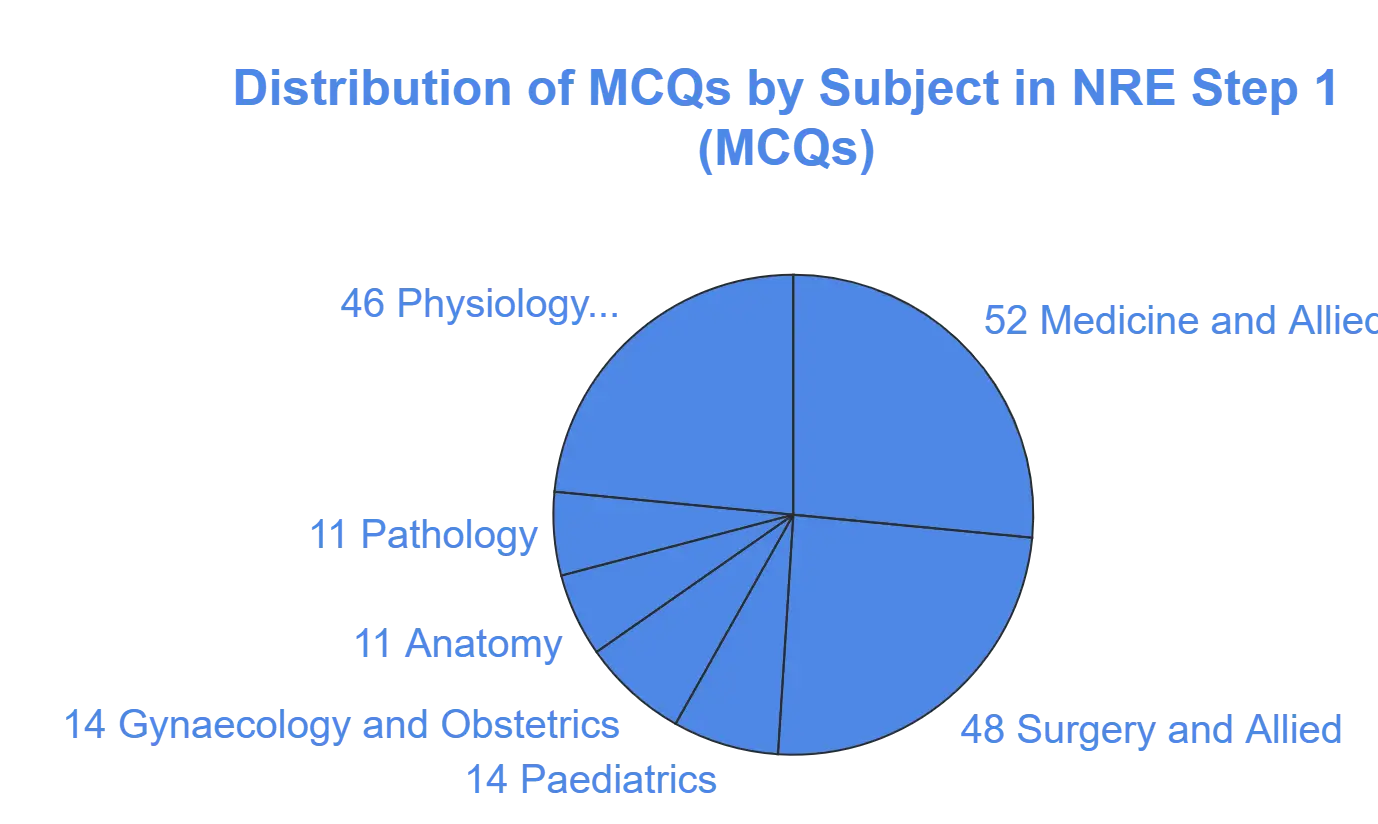
Here is a simplified breakdown of the PMDC NRE Step 1 subjects that I’ve created to help upcoming aspirants prepare more effectively.
- Neurology
- Biochemistry
- Endocrine
- Anatomy
- Pharmacology
- Ophthalmology
- Gyne Obs
- GIT
- GIT Surgery
- Respiratory
- Reproductive Cancer
- Immunology
- Musculoskeletal
- Surgery
- Microbiology
- Pediatrics
- Neonatology
- Hematology
- Renal
- CVS
PMDC NRE/NLE Step 2: OSCP
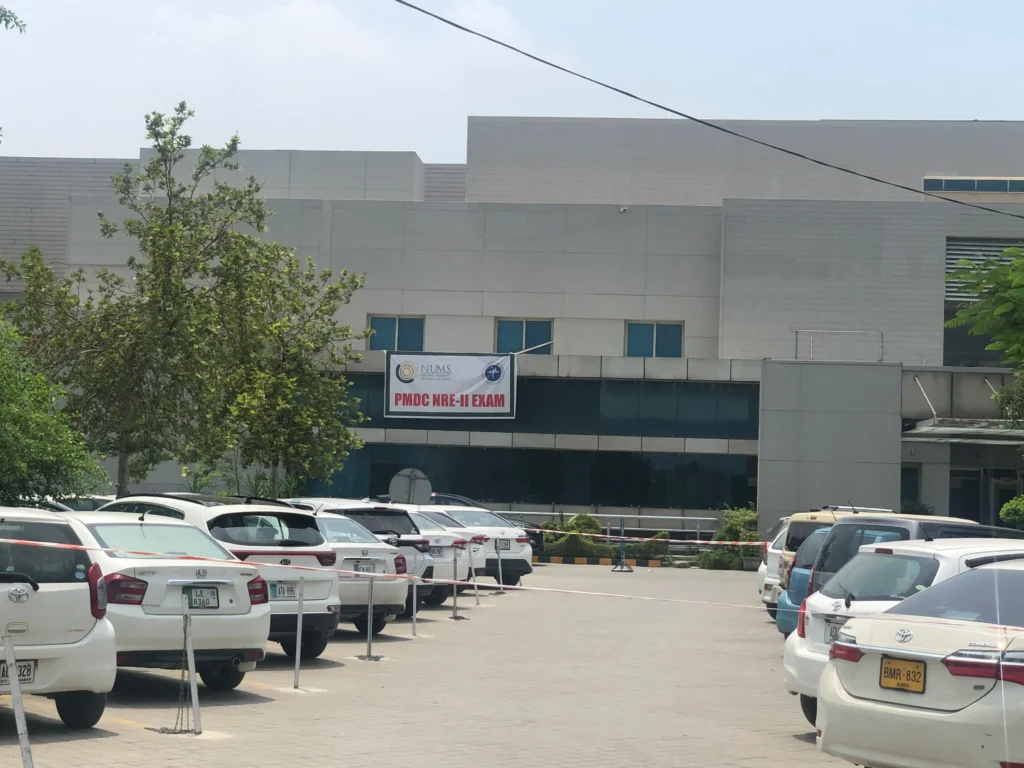
Pmdc nre/nle step 2 is a based exam. There are a total of 20 stations. Out of these, 3 stations are mandatory to pass, while the remaining are optional. Each station has 6 minutes to pass, and 4 are resting stations in which you will sit quietly.
Instructions For Examinees
Go Prepared & be confident
- Well-dressed / groomed and with necessary medical equipment as per admit card.
- Do not loose your grip and remain calm especially in the mandatory stations
Listen to what the patient has to say
- Examiners are looking for real time interaction with the patients
- Do not use stock phrases, appear genuinely concerned
Check that you understand what you are being asked to do
- Make sure you understand the instructions, you may read them again if not understood
- If asked any question or if instructed to narrate task at hand you must be relevant and focused on the task and explain only the specific task at hand
Behave as you would in real life
- Do not do what you would not in real life
- Do not show mock sympathy or empathy
- Do not start narrating any step unless asked to do so by the examiner
Make sure you know why you are doing something
- Do not perform by rote, make sure to be clear regarding examination and why you are doing so.
- Approach each station logically and calmly. Remember to manage time within the station. Do only what is asked of you.
- lf time is over leave the station, as you will not get any extra marks.
- Where asked to take history etc do not ask irrelevant questions.
1. Compulsory Stations
3 stations are compulsory to pass, as follows.
1. Physical Examination
May include any of the following:
- General Physical Examination (e.g., fever, flu, cough, jaundice)
- Cardiovascular Examination (e.g., murmurs)
- Respiratory/Chest Examination
- Neurological Examination (cranial nerves, cerebellum)
- Abdominal Examination (spleen, liver, kidneys)
2. Basic Life Support (BLS)
Demonstration of proper BLS technique and response to emergency scenarios.
3. Pediatrics history taking
2. Additional Stations
- Examination of Cranial Nerves
- Examination of Upper Limb & Lower Limb
- Examination of Abdomen
- Thyroid & Cerebellum
- Basic Of ECG
- Breaking Bad News About Breast Cancer
- Derma
- ENT
- Gyne
- History Format & History of Cough (Dry Vs Productive Cough)
- History of Headache, Epigastric Pain & Imp List of Histories
- Consent Cases
- Important Counselling Cases (Counselling of patient, guardian to remove patient from ventilator)
- Important Instruments (Name, Parts, Indication & Contraindication
- Lab interpret
- Medical history
- Obstetric
- Ophthalmology
- Peads
- Radiology (Different Fracture X-Ray & CT)